Table of Contents
- Why Try a Homemade Hair Mask?
- How to Choose a Mask for Your Hair Type
- Pantry-Friendly DIY Hair Mask Recipes
- How to Apply for Best Results
- Troubleshooting Common Issues
- Safety, Allergy Checks, and Ingredient Substitutions
- Frequently Asked Questions
- Printable Recipe Card and Simple Routine Planner
Are you looking for a way to revitalize your hair without a trip to the salon? The answer might be waiting in your kitchen pantry. A DIY hair mask is a simple, cost-effective, and natural way to deliver a concentrated dose of nutrients directly to your strands and scalp. Forget confusing ingredient labels and high price tags; this guide will walk you through creating the perfect, fully customized hair treatment at home. Whether your hair is dry, damaged, oily, or curly, there’s a perfect DIY hair mask recipe for you.
Why Try a Homemade Hair Mask?
In a world of endless hair care products, turning to a homemade solution offers unique and compelling advantages. Commercial products can be effective, but a DIY hair mask provides a level of control and freshness that is hard to beat. Here’s why you should consider whipping up your own hair treatment.
- Complete Ingredient Control: You know exactly what’s going onto your hair and scalp. This means no hidden silicones, parabens, or harsh sulfates that can sometimes cause buildup or irritation. You can tailor your mask to avoid allergens and focus only on what your hair truly needs.
- Cost-Effective Beauty: High-quality hair treatments can be expensive. A DIY hair mask uses affordable, everyday ingredients you likely already have, such as bananas, eggs, and honey. It’s a budget-friendly way to achieve salon-quality results.
- Fresh and Potent Nutrients: Using fresh ingredients means you are applying vitamins, minerals, and antioxidants in their most potent form. Just as fresh food is better for your body, fresh ingredients are better for your hair. For more on the link between diet and hair, see this hair nutrition research.
- Eco-Friendly: By using ingredients from your kitchen, you reduce packaging waste associated with commercial products. It’s a small but meaningful step towards a more sustainable beauty routine.
How to Choose a Mask for Your Hair Type
The key to a successful DIY hair mask is customization. Using the right ingredients for your specific hair type and concerns will make the difference between lackluster results and locks that look and feel amazing. It all starts with understanding your hair.
Identifying Your Hair Type and Concerns
Before you start mixing, take a moment to assess your hair. Consider the following factors:
- Hair Texture: Is your hair fine, medium, or coarse? Fine hair gets weighed down easily, while coarse hair can often handle richer ingredients.
- Hair Porosity: This refers to your hair’s ability to absorb and retain moisture. Low-porosity hair has tightly packed cuticles and resists moisture, while high-porosity hair absorbs it quickly but can also lose it just as fast, often leading to frizz and damage. You can find a good hair types overview to learn more.
- Scalp Condition: Is your scalp oily, dry, flaky, or balanced? Your scalp is the foundation for healthy hair, so addressing its needs is crucial.
- Primary Concerns: What is your main hair goal? Are you fighting dryness, repairing damage from heat or color, trying to reduce frizz, or seeking more volume?
Matching Ingredients to Needs (Moisture, Protein, Scalp)
Once you’ve identified your hair’s needs, you can choose ingredients that target those specific issues. Most hair concerns fall into three categories: a need for moisture, a need for protein, or a need for scalp balancing.
- For Moisture (Hydration): These ingredients are rich in vitamins, fatty acids, and natural sugars (humectants) that draw moisture into the hair shaft. They are ideal for dry, dull, or frizzy hair.
- Avocado
- Honey
- Banana
- Olive Oil or Coconut Oil
- Aloe Vera Gel
- For Protein (Strength): These ingredients help repair and strengthen the hair’s natural keratin structure. They are perfect for damaged, brittle, or fine hair that lacks body.
- Egg (the yolk is rich in fats, the white in protein)
- Greek Yogurt
- Gelatin
- For Scalp Health: These ingredients have antimicrobial, anti-inflammatory, or clarifying properties to soothe irritation, control oil, and remove buildup.
- Green Tea
- Apple Cider Vinegar
- Tea Tree Oil (use sparingly, diluted)
- Aloe Vera Gel
Pantry-Friendly DIY Hair Mask Recipes
Ready to get started? Here are four simple yet powerful DIY hair mask recipes you can make today using common pantry staples. Remember to blend all ingredients until completely smooth to avoid leaving chunks in your hair.
Deep-Moisture Avocado and Honey Mask (Dry Hair)
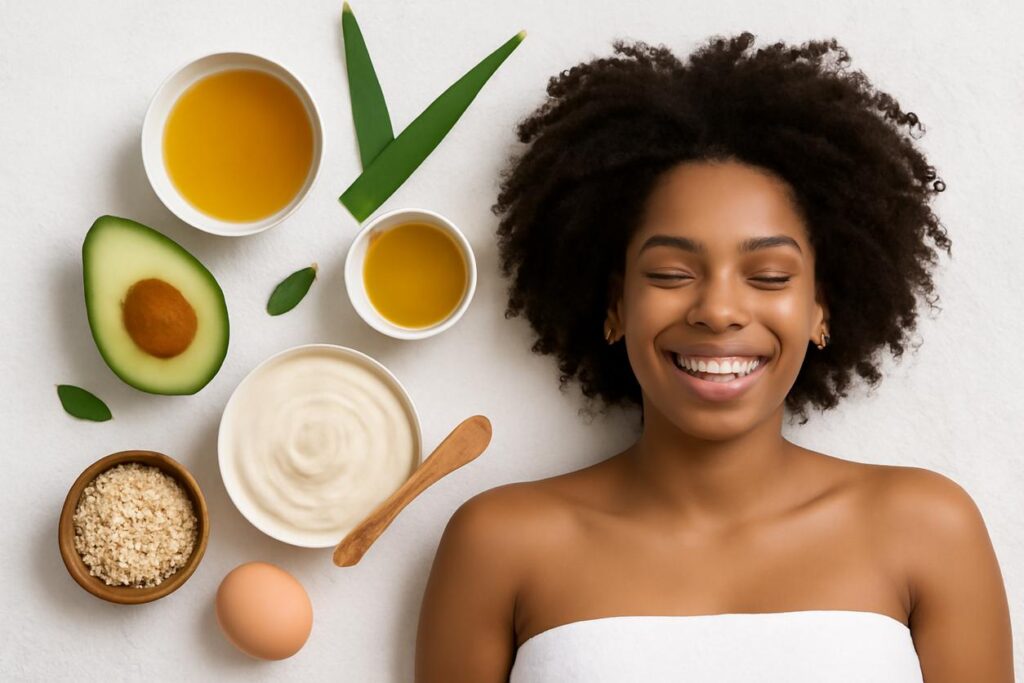
This ultra-creamy mask is a savior for thirsty, brittle hair. Avocado is packed with healthy fats and vitamins E and B, while honey is a natural humectant that seals in moisture.
- Ingredients: 1/2 ripe avocado, 1 tablespoon honey, 1 tablespoon olive oil.
- Instructions: Mash the avocado in a bowl until there are no lumps. Stir in the honey and olive oil until you have a smooth, consistent paste. Apply to damp hair, focusing on the ends.
Protein Boost Yogurt and Egg Mask (Damaged or Brittle Hair)
If your hair feels weak or overly stretchy, it’s likely craving protein. This mask helps fortify strands from the inside out. Yogurt’s lactic acid also gently exfoliates the scalp.
- Ingredients: 1 egg, 2 tablespoons plain Greek yogurt.
- Instructions: Whisk the egg and yogurt together until well combined. Apply the mixture from roots to ends on damp hair. Important: Rinse with cool or lukewarm water to avoid scrambling the egg in your hair.
Scalp-Refreshing Green Tea and Aloe Mask (Oily or Flaky Scalp)
This clarifying and soothing mask helps balance an oily scalp and calm irritation without stripping your hair. Green tea is rich in antioxidants, and aloe vera is known for its anti-inflammatory properties.
- Ingredients: 1/2 cup brewed and cooled green tea, 2 tablespoons aloe vera gel.
- Instructions: Mix the cooled green tea and aloe vera gel. You can apply this more liquid mask using a spray bottle or by carefully pouring it over your scalp and hair. Gently massage it into your scalp.
Curl-Enhancing Banana and Oil Mask (Curly Hair)
Curly hair needs both moisture and slip to prevent frizz and enhance definition. Bananas are rich in potassium and silica, which can help soften hair and strengthen it. Explore a natural oils guide to see which oil best suits your curl type.
- Ingredients: 1 ripe banana, 1 tablespoon coconut or olive oil.
- Instructions: Blend the banana until it is completely pureed—this is the most important step to prevent banana bits from getting stuck in your curls! Mix in the oil until smooth. Apply to hair, ensuring all curls are coated.
How to Apply for Best Results
How you apply your DIY hair mask is just as important as the ingredients you use. Follow these steps to maximize the benefits of your homemade treatment.
Timing, Heat and Rinse Techniques
- Prep Your Hair: It’s best to apply a mask to clean, towel-dried (damp) hair. This allows the ingredients to penetrate the hair shaft without being blocked by dirt or product buildup.
- Application: Section your hair and apply the mask evenly from roots to ends, using your fingers or a brush. Pay extra attention to the areas that need it most, like dry ends or an oily scalp.
- Timing is Key: Leave the mask on for 20-30 minutes. This gives the nutrients enough time to work their magic. Leaving it on for hours doesn’t always add more benefits, especially for protein masks, which can make hair stiff if overused.
- Add Gentle Heat: Cover your hair with a shower cap or a warm towel. This traps your natural body heat, which helps open the hair cuticle and allows the mask to penetrate more deeply.
- Rinse Thoroughly: Use lukewarm or cool water to rinse the mask out completely. Hot water can strip moisture and, in the case of egg-based masks, create a mess. Continue rinsing until your hair feels clean and free of residue. Follow with your regular conditioner if needed to seal the cuticle.
When to Use: Weekly Versus Monthly Routines
The ideal frequency for using a DIY hair mask depends on your hair’s condition. Creating a consistent routine is part of any successful hair care strategy for 2025 and beyond.
- Weekly: If your hair is very dry, damaged, or you’re actively trying to repair it, a weekly mask is a great routine.
- Bi-Weekly or Monthly: If your hair is generally healthy or tends to be oily, using a mask every two weeks or once a month is sufficient to maintain its health and shine.
The most important rule is to listen to your hair. If it starts to feel weighed down or overly soft, you may be over-moisturizing. If it feels stiff or brittle, you could have a protein overload. Adjust your routine accordingly.
Troubleshooting Common Issues
Sometimes your first attempt at a DIY hair mask might not go perfectly. Don’t worry! Most common problems are easy to fix with a few simple tweaks.
Dealing with Excess Oil, Residue, or Increased Frizz
- My hair feels greasy or weighed down: This usually means the mask was too heavy for your hair type or wasn’t rinsed out properly. Next time, try using less oil or substitute a lighter oil (like jojoba instead of olive). Ensure you rinse with lukewarm water until the hair no longer feels slippery. A final rinse with diluted apple cider vinegar (1 tablespoon in 2 cups of water) can also help remove residue.
- I have bits of food stuck in my hair: This is a common issue with ingredients like banana or avocado. The solution is to blend, blend, blend! Use a blender or food processor to puree your ingredients into a completely smooth consistency before applying.
- My hair seems frizzier than before: This can happen for two reasons. First, your hair might be sensitive to protein. If you used an egg or yogurt mask and your hair feels brittle, switch to a moisture-only mask. Second, it could be a sign of high porosity hair absorbing and then losing moisture quickly. Rinsing with cool water and applying a leave-in conditioner can help seal the cuticle and lock in the benefits.
Safety, Allergy Checks, and Ingredient Substitutions
While natural ingredients are generally safe, allergies and sensitivities are still possible. Always prioritize safety when creating your DIY hair mask.
Before applying any new mixture to your entire head, perform a patch test. Apply a small amount of the mask to a discreet area of your skin, like behind your ear or on your inner elbow, and wait 24 hours to check for any signs of irritation, such as redness or itching. For more information, you can always consult general health guidance.
Don’t have an ingredient? No problem! Many can be substituted:
- Oils: Olive oil can be swapped for coconut oil, jojoba oil, or almond oil.
- Moisturizers: If you don’t have honey, pure maple syrup can work as a humectant.
- Yogurt: Sour cream or coconut cream can be used as a substitute for Greek yogurt.
Frequently Asked Questions
Can I leave a DIY hair mask on overnight?
It depends on the ingredients. Moisture-based masks (like avocado or banana) can be left on for a few hours or overnight if you protect your pillowcase. However, protein masks (with egg or yogurt) should not be left on for more than 30-45 minutes, as they can make hair brittle and cause breakage if overused.
Do I apply a DIY hair mask to wet or dry hair?
Applying your mask to clean, damp (towel-dried) hair is ideal. Dry hair can have product buildup that blocks absorption, while dripping wet hair can dilute the mask. Damp hair provides the perfect canvas for the ingredients to penetrate effectively.
Do I need to shampoo after using a DIY hair mask?
Generally, yes. Most homemade masks, especially those with oils or food ingredients, require a gentle shampoo to remove all residue. If you use a very light mask (like the green tea rinse), you might be able to skip shampoo and just use conditioner. Always rinse thoroughly first, then decide if a shampoo is needed.
Printable Recipe Card and Simple Routine Planner
To help you get started, here is an easy-to-use template for your favorite DIY hair mask recipe and a planner to keep your routine on track.
Recipe Card: Deep-Moisture Avocado and Honey Mask
| Ingredient | Amount |
|---|---|
| Ripe Avocado | 1/2 |
| Honey | 1 Tablespoon |
| Olive Oil | 1 Tablespoon |
| Instructions: Mash avocado until perfectly smooth. Mix in honey and olive oil. Apply to clean, damp hair for 20 minutes. Rinse thoroughly with lukewarm water. | |
My Weekly Hair Routine Planner
| Day of the Week | Hair Care Task |
|---|---|
| Sunday | Wash Day + DIY Hair Mask Treatment |
| Wednesday | Co-wash or Refresh |
| Friday | Wash Day |
Embracing the world of homemade hair care is a rewarding journey. By understanding your hair’s needs and using the power of simple, natural ingredients, you can create a personalized DIY hair mask that leaves your hair healthier, stronger, and more radiant than ever before.