The Ultimate Guide to Creating Your Perfect DIY Hair Mask
Welcome to your complete guide to crafting the perfect DIY hair mask right from your kitchen. Forget confusing ingredient lists and expensive salon treatments; the path to healthier, more radiant hair can start with simple, natural ingredients you already own. This guide is designed for beginners and eco-conscious enthusiasts who want to take control of their hair care routine, one nourishing mask at a time.
By creating your own treatments, you not only save money but also ensure every single ingredient serves a purpose for your unique hair needs. We will explore how to understand your hair’s profile, the science behind core ingredient groups, and provide bespoke recipes you can customize. Let’s dive in and unlock the potential of homemade hair care.
Table of Contents
- Assessing Your Hair: Your Personal Hair Profile
- The Building Blocks: Core Ingredient Groups Explained
- Safety First: A Non-Negotiable Step
- DIY Hair Mask Recipes for Every Goal
- Customizing Your Mask: Ingredient Swaps and Substitutions
- The Ultimate Guide to Application
- Integrating Masks into Your Routine
- Troubleshooting Common DIY Hair Mask Issues
- Aftercare: Maximizing Your Mask’s Benefits
- Track Your Progress: The DIY Hair Mask Journal
- Frequently Asked Questions (FAQ)
- Further Reading and Resources
- A Note on Our Editorial Standards
Assessing Your Hair: Your Personal Hair Profile
Before you start mixing, understanding your hair’s specific characteristics is key to choosing the right ingredients. A DIY hair mask that works wonders for one person might not be right for another. Here’s a quick self-test.
Porosity: The Water Test
Porosity refers to your hair’s ability to absorb and retain moisture. It’s a game-changer for product selection.
- The Test: Take a clean, product-free strand of hair and drop it into a glass of water.
- Low Porosity: If the strand floats, your hair has low porosity. The cuticle is tightly packed, making it hard for moisture to get in. You’ll need lightweight oils and humectants.
- Normal Porosity: If the strand slowly sinks, you have normal porosity. Your hair absorbs and retains moisture well.
- High Porosity: If the strand sinks quickly, your hair has high porosity. The cuticle is raised, so it absorbs moisture easily but loses it just as fast. It craves sealing oils and proteins to fill in the gaps.
Density and Texture
Density is how many strands you have (thin, medium, thick), while texture refers to the thickness of individual strands (fine, medium, coarse). Fine, low-density hair can be easily weighed down by heavy oils, whereas coarse, high-density hair may need richer ingredients to feel an effect.
Damage and Goals
Be honest about your hair’s condition and what you want to achieve. Is it dry from heat styling? Weak from chemical treatments? Are you aiming for more shine, less frizz, or a healthier scalp? Your goals will directly influence your recipe choices.
The Building Blocks: Core Ingredient Groups Explained
Kitchen ingredients can be categorized into groups based on how they benefit the hair. Understanding these will empower you to create a truly effective DIY hair mask.
Moisturizing Oils (Emollients)
These ingredients smooth the hair cuticle, add shine, and lock in moisture. They are essential for combating dryness and frizz.
- Examples: Coconut oil, olive oil, avocado, shea butter.
- How they work: They form a protective barrier on the hair shaft, preventing moisture from escaping. This is especially beneficial for high-porosity hair.
Proteins (Strengtheners)
Protein treatments temporarily patch gaps in the hair cuticle, adding strength and structure to weak or damaged strands.
- Examples: Egg, Greek yogurt, gelatin.
- How they work: Hair is primarily made of a protein called keratin. These ingredients provide amino acids that bond to the hair, reinforcing its natural structure. Use with caution, as too much protein can cause stiffness.
Humectants (Hydrators)
Humectants are moisture magnets. They draw water from the air into the hair shaft, providing deep hydration.
- Examples: Honey, agave nectar, glycerin, aloe vera.
- How they work: They attract and bind to water molecules, making them perfect for dehydrated hair. In very dry climates, they can sometimes pull moisture *from* the hair, so they are best paired with a sealing oil.
Acids (pH Balancers)
Slightly acidic rinses help to seal the hair cuticle, which enhances shine and reduces frizz.
- Examples: Apple cider vinegar (diluted), lemon juice (diluted), plain yogurt.
- How they work: The hair’s natural pH is slightly acidic. Using these ingredients after a mask helps to flatten the cuticle, making hair smoother and less prone to tangling.
Safety First: A Non-Negotiable Step
Just because an ingredient is natural doesn’t mean it’s right for everyone. Prioritizing safety is essential when making a DIY hair mask.
Patch Testing for Allergies
Before applying any new mixture to your entire head, always perform a patch test. Apply a small amount of the mask to a discreet area of skin, like behind your ear or on your inner elbow. Wait 24 hours to check for any signs of redness, itching, or irritation.
Freshness and Preservatives
Your homemade hair mask is made from fresh food ingredients without preservatives. This means you should make it fresh for each use. Do not store mixtures containing ingredients like egg, yogurt, or fresh fruit, as they can spoil quickly and grow harmful bacteria.
Scent Sensitivity
If using essential oils for fragrance, use them sparingly (1-2 drops is often enough). Some essential oils can be irritating to the scalp or cause allergic reactions. Always dilute them in a carrier oil (like coconut or olive oil) included in your mask base.
DIY Hair Mask Recipes for Every Goal
Here are ten foundational recipes. Feel free to adjust quantities based on your hair length and density. Always blend ingredients until smooth to avoid lumps.
For Intense Hydration (Dry/Brittle Hair)
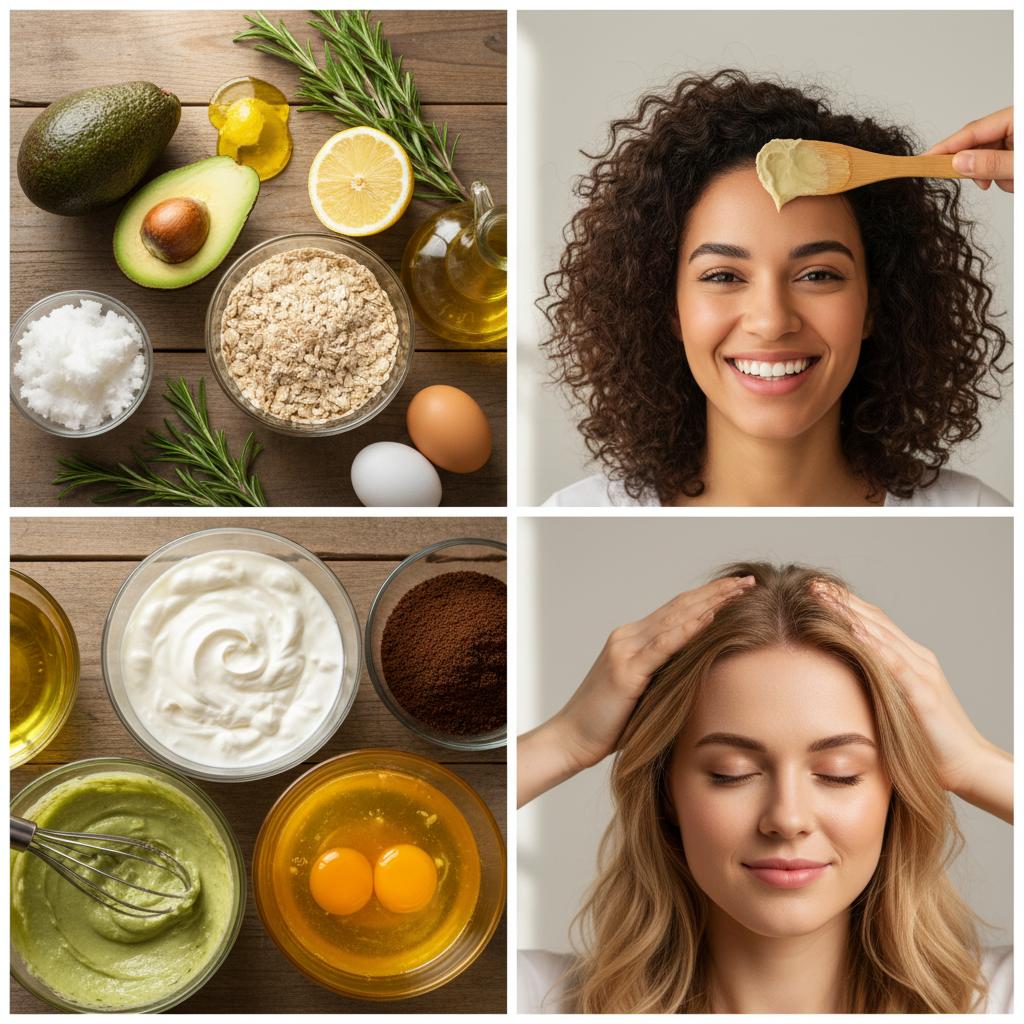
- Ingredients: 1/2 ripe avocado, 1 tablespoon olive oil, 1 tablespoon honey.
- Why it works: Avocado and olive oil provide fatty acids to deeply moisturize, while honey acts as a humectant to draw in moisture.
For Strengthening (Damaged/Weak Hair)
- Ingredients: 1 egg, 2 tablespoons plain Greek yogurt, 1 tablespoon coconut oil.
- Why it works: The egg provides a protein boost to fortify strands, while yogurt’s lactic acid gently cleanses and coconut oil adds moisture.
For Scalp Balance (Oily or Flaky Scalp)
- Ingredients: 2 tablespoons aloe vera gel, 1 tablespoon lemon juice, 3 drops of tea tree oil.
- Why it works: Aloe vera soothes, lemon juice helps clarify and balance pH, and tea tree oil has natural antimicrobial properties.
For Brilliant Shine (Dull Hair)
- Ingredients: 1/4 cup apple cider vinegar (ACV), 1 cup cool water. (This is more of a rinse). Or, for a mask: 2 tablespoons yogurt and 1 tablespoon ACV.
- Why it works: The acidity of the vinegar flattens the hair cuticle, allowing it to reflect more light.
For Curl Definition (Wavy/Curly Hair)
- Ingredients: 1/2 cup coconut milk, 2 tablespoons honey, 1 tablespoon almond oil.
- Why it works: Coconut milk provides protein and moisture, honey hydrates, and almond oil seals for frizz-free definition.
For Color-Treated Hair
- Ingredients: 1 mashed banana, 2 tablespoons olive oil, 1 tablespoon honey.
- Why it works: Banana is rich in potassium and silica to improve elasticity, while the oil and honey restore moisture lost during coloring processes.
For Fine Hair Volume
- Ingredients: 1 egg white, 2 tablespoons aloe vera gel.
- Why it works: Egg white tightens the scalp and follicles for a temporary lift without weighing hair down, and aloe vera provides lightweight hydration.
Overnight Intensive Treatment
- Ingredients: 3 tablespoons coconut oil, 2 tablespoons shea butter (melted and cooled slightly).
- Why it works: These rich emollients have ample time to penetrate the hair shaft overnight for deep conditioning. Protect your pillow with a towel or cap!
10-Minute Quick Boost Mask
- Ingredients: 2 tablespoons conditioner (your usual one), 1 tablespoon honey.
- Why it works: This simple mix supercharges your regular conditioner with honey’s humectant properties for a fast and effective moisture boost.
Customizing Your Mask: Ingredient Swaps and Substitutions
Your DIY hair mask should be tailored to you. Use this table for easy swaps based on allergies, dietary preferences, or what’s available in your pantry.
| Original Ingredient | Reason for Swapping | Suggested Substitutions |
|---|---|---|
| Egg (Protein) | Vegan / Allergy | Coconut milk, avocado, or banana (for moisture and some strengthening minerals) |
| Yogurt (Protein/Acid) | Vegan / Dairy-free | Full-fat coconut cream or a plant-based yogurt alternative |
| Honey (Humectant) | Vegan | Agave nectar or pure maple syrup |
| Coconut Oil (Sealing Oil) | Allergy / Too heavy | Olive oil, jojoba oil (lighter), grapeseed oil (very light), or almond oil |
| Almond Oil (Nut allergy) | Nut Allergy | Jojoba oil, grapeseed oil, or sunflower oil |
The Ultimate Guide to Application
Proper application ensures you get the most out of your treatment. Follow these steps for a mess-free, effective experience.
Step 1: Preparation and Mixing
Gather your ingredients. Use a blender for a super-smooth consistency, especially with ingredients like banana or avocado, to prevent leaving bits in your hair. Start with clean, damp (towel-dried) hair. This allows the mask to penetrate more effectively than on dry or dirty hair.
Step 2: Application Technique
Section your hair into 4-6 parts. Apply the mask from the roots to the ends, using your fingers to work it through each section. Pay extra attention to the ends, which are often the driest part of the hair.
Step 3: Timing and Processing
Once your hair is fully saturated, pile it on top of your head and cover it with a shower cap or plastic wrap. This traps heat, helping the ingredients penetrate deeper. Leave the mask on for 20-30 minutes. For an intensive treatment, you can leave it on for up to an hour (unless it contains protein, which shouldn’t be left on too long).
Step 4: Rinsing Method
Rinse the mask out thoroughly with lukewarm water. Using water that’s too hot can strip away the moisture you just added. Follow up with your regular shampoo (if needed, especially for oily masks) and conditioner to seal the cuticle.
Integrating Masks into Your Routine
How Often Should You Use a DIY Hair Mask?
The frequency depends on your hair’s needs:
- For dry or damaged hair: Once a week.
- For normal hair: Every two weeks.
- For oily or fine hair: Once a month, focusing on the ends.
Listen to your hair. If it starts to feel weighed down or overly soft, scale back.
Layering with Other Products
A DIY hair mask is a deep treatment. It should typically be applied after shampooing (on clean hair) and before conditioning. The conditioner’s role is to seal the cuticle and lock in the benefits of the mask.
Troubleshooting Common DIY Hair Mask Issues
My Hair Feels Greasy
This usually means you used too much oil or didn’t rinse thoroughly. Next time, reduce the amount of oil in your recipe or try a lighter oil like jojoba or grapeseed. Ensure you shampoo after rinsing the mask out.
My Hair Feels Stiff or Brittle
This is a classic sign of protein overload. Your hair may not need as much protein as you think. Cut back on protein-heavy masks (like those with egg or yogurt) to once a month and focus on moisture-based recipes in between.
There’s a Residue Left Over
If you have bits of food in your hair, your mask wasn’t blended smoothly enough. A blender is your best friend here! A final rinse with diluted apple cider vinegar can also help remove any remaining residue.
Aftercare: Maximizing Your Mask’s Benefits
What you do after your mask is just as important as the treatment itself.
Detangling and Drying
Use a wide-tooth comb to gently detangle your hair while it’s still damp and coated with conditioner. Avoid harsh towel rubbing; instead, gently squeeze out excess water with a soft t-shirt or microfiber towel to minimize frizz.
Styling Tips
Apply your usual leave-in conditioners and styling products. You may find you need less product than usual, as your hair is already well-moisturized. Try to air-dry or use a diffuser on low heat to preserve the benefits of your homemade hair mask.
Track Your Progress: The DIY Hair Mask Journal
To perfect your custom blends, keep a simple journal. This will help you identify what your hair loves and what it doesn’t. Your 2026 hair goals start with tracking today!
- Date:
- Ingredients Used: (Be specific with amounts)
- Processing Time:
- Immediate Result: (e.g., Softness, shine, less frizz)
- Next-Day Feel: (e.g., Weighed down, bouncy, still moisturized)
- Notes for Next Time: (e.g., Use less coconut oil, blend longer)
Frequently Asked Questions (FAQ)
How much mask should I use?
This depends on hair length and thickness. A good starting point is about 1/2 cup of total mixture for shoulder-length hair. Adjust as needed until your hair is fully saturated but not dripping excessively.
Should I use heat with my mask?
Yes! Applying gentle heat helps open the hair cuticle for better absorption. Covering your hair with a shower cap and then wrapping a warm, damp towel around it for 10-15 minutes works wonders.
Can I store my DIY hair mask?
Because they are made with fresh ingredients, these masks are preservative-free and should be made fresh for each use. Do not store leftovers.
Further Reading and Resources
For those interested in the science behind hair care, these resources provide a deeper understanding of hair biology and health. Exploring topics like hair nutrition and natural care can further enhance your journey. The National Health Service (NHS) offers practical advice on how to prevent hair loss and discusses the evidence for various home remedies for hair growth. The American Academy of Dermatology provides excellent tips on general natural hair care practices. For a scientific deep dive, this article on hair nutrition is a comprehensive resource.
A Note on Our Editorial Standards
The information provided in this article by Rich Hair UK is for educational and informational purposes only. Our content is based on thorough research and a commitment to providing practical, science-backed advice. We do not promote specific products or services. All recipes and techniques are suggestions, and we strongly advise performing a patch test before trying any new ingredient on your skin or hair. Your hair journey is personal, and we are here to guide you with safe, effective, and empowering information.