
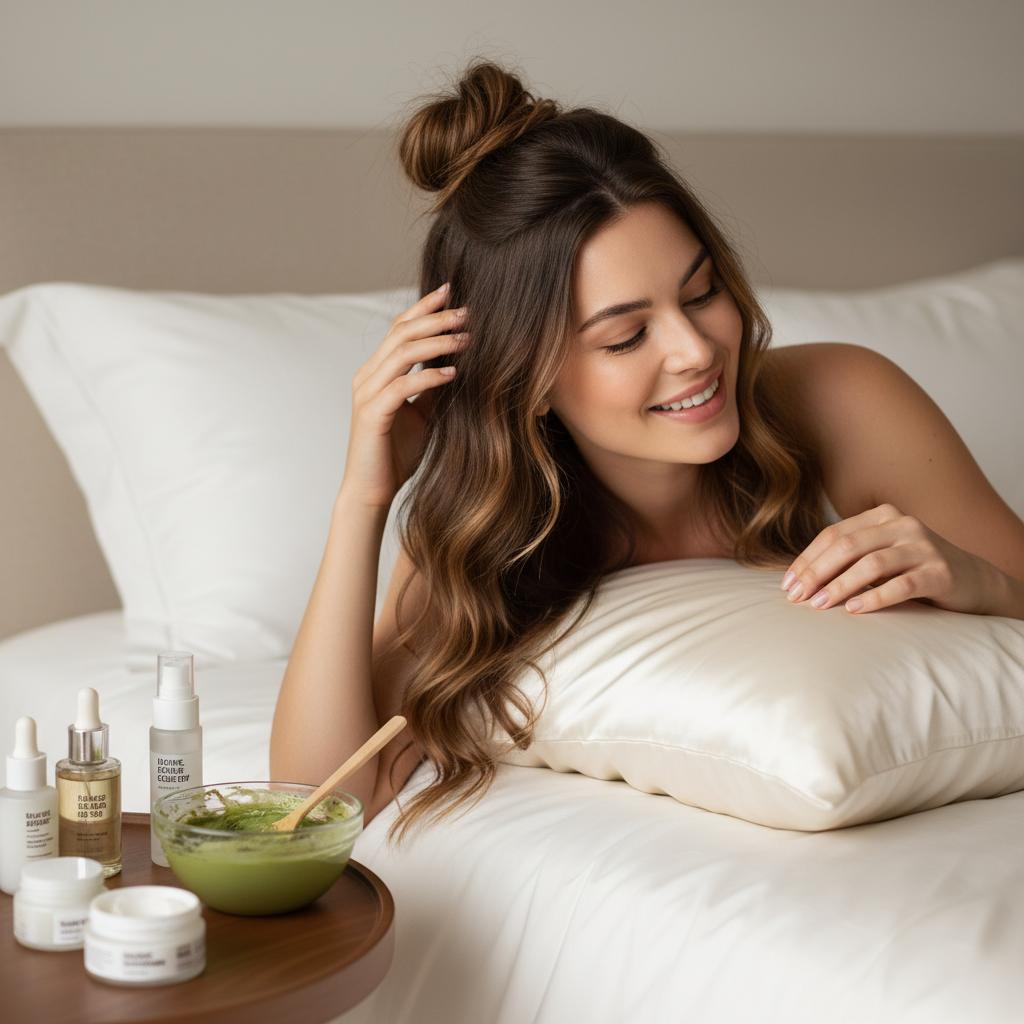
Unlock the secret to healthier, more manageable hair while you sleep. You might think a great hair day starts in the morning, but the foundation is actually laid the night before. This guide to overnight hair care is designed for busy adults who want maximum results with minimum effort. Forget complicated, time-consuming rituals; we’re focusing on simple, effective strategies that fit into your life, helping you wake up with hair that’s ready to go.
By dedicating just a few minutes before bed, you can protect your strands from damage, lock in moisture, and cut down on your morning styling time. Let’s explore how to make your sleep work for your hair.
Why nighttime hair habits matter
Think of your overnight hair care routine as an essential part of your self-care. Just as your skin repairs itself while you sleep, your hair can also benefit immensely from a dedicated nighttime regimen. The 8 hours you spend in bed can either be a period of damage and stress for your hair or a time of restoration and protection. Making the right choices can be the difference between waking up to a frizzy, tangled mess and waking up with smooth, shiny, and manageable locks.
What happens to hair while you sleep
As you toss and turn, your hair is subjected to constant friction against your pillowcase. This is a primary cause of several common hair woes:
- Breakage: The friction can weaken the hair shaft, leading to split ends and breakage, especially if your hair is fine or chemically treated.
- Frizz and Tangles: The rubbing motion lifts the hair’s cuticle layer, creating frizz and causing strands to knot together.
- Moisture Loss: Standard cotton pillowcases are highly absorbent. They can wick moisture away from your hair, leaving it dry and brittle by morning.
A smart overnight hair care plan minimizes these negative effects and turns your sleep into a restorative treatment, preserving your hair’s health and style.
A simple pre-sleep routine (5 to 10 minutes)
You don’t need an elaborate, hour-long process. A consistent, simple routine is far more effective. Here’s a foundational plan you can adapt to your needs.
- Detangle Gently: Always work from the ends up to the roots using a wide-tooth comb or your fingers. This prevents you from pulling on knots and causing breakage. Never aggressively brush your hair, especially when it’s dry.
- Apply a Product (Optional): Depending on your hair type, apply a small amount of a lightweight leave-in conditioner, serum, or oil to your mid-lengths and ends. This helps to hydrate and protect your strands overnight.
- Secure Your Hair: Put your hair up into a loose, protective style. This is the most crucial step for preventing friction and tangles.
Quick routine for very short nights
On days when you’re completely exhausted, don’t skip your routine entirely. A 60-second version is better than nothing:
- Quickly run your fingers through your hair to remove major tangles.
- Secure it in a loose bun or braid on top of your head.
This minimal effort still provides significant protection and makes your morning much easier.
Protective styles and pillowcase choices
How you secure your hair and what you sleep on are two of the biggest factors in a successful overnight hair care strategy.
For protective styling, the key is to be loose and gentle. Avoid tight elastics with metal parts, as they can cause dents and breakage. Instead, opt for soft materials.
- The Loose Braid: A simple, loose braid is perfect for preventing tangles in straight or wavy hair. It can also create soft, heatless waves.
- The Pineapple: Ideal for curly and coily hair, this involves gathering your hair into a very high, loose ponytail on top of your head. This protects the curls from being crushed.
- The Loose Bun: Gather your hair into a loose bun at the crown of your head, secured with a gentle scrunchie. This keeps hair off your neck and face while minimizing friction.
Budget friendly silk alternatives
Silk pillowcases are fantastic because their smooth surface reduces friction and they don’t absorb as much moisture as cotton. However, they can be an investment. If you’re looking for a more affordable option, consider these:
- Satin Pillowcases: Satin provides a similar smooth surface to silk at a fraction of the cost. It offers comparable benefits in reducing friction and moisture loss.
- Satin Bonnets or Scarves: Wrapping your hair in a satin bonnet or scarf is an extremely effective and inexpensive way to protect it. This method keeps your hair fully contained, maximizing protection regardless of your pillowcase material.
Overnight treatments and safe DIY masks
Nighttime is the perfect opportunity to let a deep conditioning treatment work its magic. With hours of uninterrupted time, the ingredients can fully penetrate the hair shaft. You can use a store-bought mask or create a simple, effective one at home.
Important Safety Tip: When using any DIY mask, always do a patch test on a small area of your skin first to check for any allergic reaction. Protect your pillowcase by wearing a shower cap or wrapping your hair in an old t-shirt.
Recipes for dry, damaged, oily, and curly hair
- For Dry or Damaged Hair: Mix two tablespoons of aloe vera gel with a teaspoon of argan or jojoba oil. Aloe vera is hydrating and soothing, while the oil seals in moisture. Apply to your mid-lengths and ends.
- For Oily Hair: Focus on the scalp. Brew a strong cup of green tea, let it cool completely, and use a spray bottle to lightly mist your roots. Green tea contains tannins that can help regulate sebum production. This is a very light treatment that shouldn’t make hair greasy.
- For Curly Hair Definition: In a spray bottle, mix one part of your favorite leave-in conditioner with three parts water. Lightly mist your curls to rehydrate them and encourage clumping without weighing them down. This is more of a refresh than a deep mask.
How to adapt routines for common hair types
A one-size-fits-all approach to overnight hair care doesn’t work. Customizing your routine to your hair’s unique needs is key to achieving the best results. For more in-depth guidance on hair care, the American Academy of Dermatology offers valuable resources.
Straight and fine hair tips
The main goal for fine, straight hair is to prevent oiliness at the roots and avoid weighing the hair down.
- Pre-Sleep Prep: If your roots tend to get oily, apply a small amount of a gentle dry shampoo before bed. This will absorb excess oil overnight.
- Protective Style: A loose bun on top of your head is ideal. It keeps hair from getting flattened and can add a bit of volume by morning.
- Product Choice: Use very lightweight serums or oils, and apply only to the very ends to prevent split ends without causing greasiness.
Wavy and thick hair tips
For wavy and thick hair, the focus is on taming frizz and preserving your natural wave pattern.
- Pre-Sleep Prep: Apply a small amount of anti-frizz cream or a lightweight leave-in conditioner.
- Protective Style: One or two loose braids are perfect. This will prevent tangles and enhance your waves without making them too defined or crimped.
- Pillowcase: A satin or silk pillowcase is highly recommended to combat frizz.
Curly and coily hair tips
Moisture retention and preventing curls from getting crushed are the top priorities for curly and coily hair.
- Pre-Sleep Prep: Use the “LOC” (Leave-in, Oil, Cream) or “LCO” method on any dry sections to lock in moisture. Alternatively, use a curl refreshing spray.
- Protective Style: The “pineapple” is the go-to style. Gather your curls into a very high, loose ponytail on top of your head using a scrunchie.
- Head Covering: A satin bonnet or scarf is essential. It protects your curls, reduces frizz, and helps retain moisture far better than just a pillowcase.
Weekly schedule and progress tracking
Consistency is everything. To make your overnight hair care a habit, create a simple weekly schedule. Here is a sample plan you can adapt for 2026 and beyond:
| Day | Overnight Routine |
|---|---|
| Sunday | Deep Treatment Night (Apply DIY or store-bought mask) |
| Monday | Basic Routine (Detangle and protective style) |
| Tuesday | Refresh Night (Light mist of water or leave-in spray) |
| Wednesday | Basic Routine (Detangle and protective style) |
| Thursday | Scalp Care Night (Light scalp massage or treatment) |
| Friday | Basic Routine (Detangle and protective style) |
| Saturday | Basic Routine (Detangle and protective style) |
To track your progress, take a quick photo of your hair every Sunday morning. Over a few weeks, you’ll be able to see a visible difference in shine, smoothness, and overall health.
Ingredients to avoid before bed
Not all hair products are suitable for overnight use. Some can cause buildup, dryness, or scalp irritation. Be cautious of:
- Heavy Silicones: Non-water-soluble silicones can build up on the hair shaft, leading to dryness and dullness over time.
- Drying Alcohols: Certain alcohols (like alcohol denat) can be very drying if left on the hair for hours.
- Heavy Gels or Mousses: These styling products can make hair stiff, sticky, and prone to breakage overnight. Save them for your morning routine.
Troubleshooting common overnight problems
- Problem: Waking up with greasy hair.
Solution: You might be using too much product or applying it too close to your roots. Focus application on the mid-lengths and ends. You can also try a light dusting of dry shampoo at the roots before bed. - Problem: Hair has dents from the hair tie.
Solution: Your protective style is too tight. Switch to a soft fabric scrunchie or a spiral hair tie and make sure the bun or braid is very loose. - Problem: Overnight mask stained my pillowcase.
Solution: Always cover your hair when doing an overnight treatment. A reusable shower cap, a satin bonnet, or even an old, clean t-shirt wrapped like a turban will work perfectly.
Quick printable checklist
Use this simple checklist to build your perfect nightly routine:
- [ ] Gently detangle hair from ends to roots.
- [ ] Apply a pea-sized amount of leave-in product to ends (if needed).
- [ ] Secure hair in a loose protective style (braid, bun, pineapple).
- [ ] Use a soft, non-damaging hair tie (scrunchie).
- [ ] Sleep on a silk or satin pillowcase, or wear a satin bonnet/scarf.
Frequently asked questions
Is it bad to sleep with wet hair?
It’s best to avoid it. Hair is at its most fragile when wet, making it highly susceptible to breakage as you move around in your sleep. Furthermore, a damp, warm environment on your scalp can potentially encourage fungal growth. If you must wash your hair at night, try to let it air dry at least 80% of the way before going to bed. For general information on hair health concerns, the NHS provides reliable advice.
How often should I use an overnight hair mask?
This depends on your hair’s condition. For most hair types, once a week is sufficient for a deep treatment. If your hair is extremely dry or damaged, you might benefit from using one twice a week initially. Listen to your hair; if it starts to feel weighed down, scale back.
Can overnight hair care help with hair growth?
Directly, no. However, a proper overnight hair care routine is crucial for length retention. Hair growth happens at the scalp, and you can explore extensive research on hair growth on PubMed. The primary benefit of these nightly habits is preventing breakage and split ends. By protecting the hair you already have, you allow it to grow longer and healthier without snapping off at the ends, which is what gives the appearance of faster growth.


