Introduction: Why Your Curls Crave Good Nutrition
Have you ever wondered why, despite using the best conditioners and stylers, your curls still feel lackluster, brittle, or frizzy? The secret to unlocking your hair’s true potential might not be in a bottle, but on your plate. Welcome to the world of curly hair nutrition, where we explore the profound connection between what you eat and the health of your beautiful coils and waves. Your hair is built from the nutrients you consume, making your diet the true foundation of any effective hair care routine. This guide will empower you with the knowledge to nourish your curls from the inside out, leading to stronger, shinier, and more resilient hair.
How Curl Structure Influences Nutritional Needs
Understanding the unique biology of curly hair is the first step in optimizing its nutrition. Unlike straight hair, which grows from a round follicle, curly hair emerges from an oval-shaped follicle. This shape causes the hair strand to twist and turn as it grows, creating its signature coils.
These twists and bends have two major implications:
- Prone to Dryness: The natural oils (sebum) produced by your scalp have a harder time traveling down the winding path of a curly hair strand. This often leaves the mid-lengths and ends thirsty for moisture.
- Increased Fragility: Every bend in the hair strand is a potential weak point where the protective outer layer, the cuticle, is slightly raised. This makes curly hair more susceptible to breakage, split ends, and damage.
Because of this inherent structure, a targeted approach to curly hair nutrition is essential. Your diet needs to provide the building blocks for strength and the internal hydration to combat natural dryness.
Key Nutrients for Resilient, Shiny Curls
A balanced diet is crucial for overall health, but certain nutrients play a starring role in hair vitality. Let’s break down the most important components of an effective diet for healthy curls.
Protein and Amino Acids: Building Blocks for Curl Strength
Your hair is primarily made of a protein called keratin. To produce keratin, your body needs amino acids, which are the building blocks of protein. A diet lacking in protein can lead to weak, brittle hair that struggles to grow.
- Key Amino Acids: Cysteine and Methionine are particularly important for forming strong disulfide bonds within the hair shaft, which give your curls their structure and elasticity.
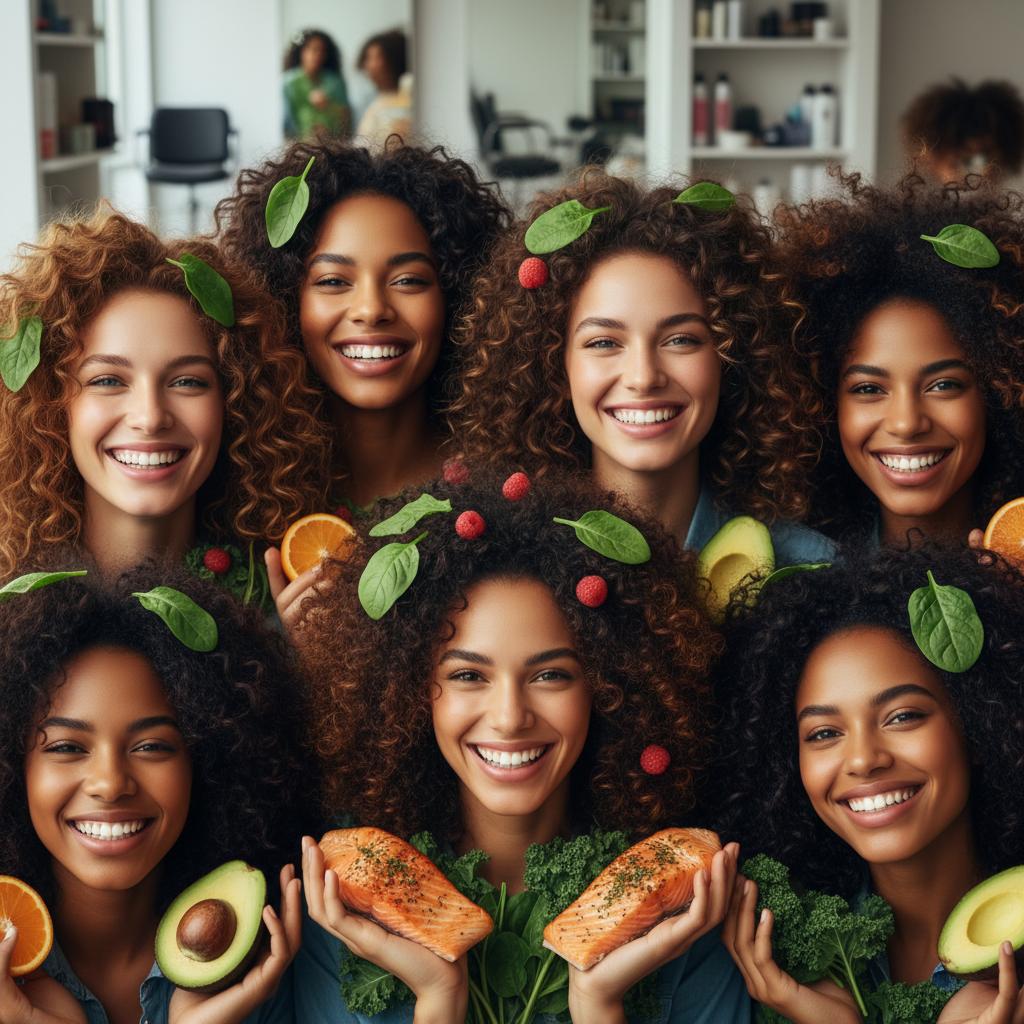
- Food Sources: Include high-quality protein sources in your meals, such as eggs, chicken, fish, lentils, chickpeas, tofu, and Greek yogurt.
Healthy Fats and Omegas: Moisture from the Inside
If you’re battling dryness, healthy fats are your best friend. Omega-3 and Omega-6 fatty acids are essential fats that your body cannot produce on its own. They play a vital role in maintaining scalp health by regulating sebum production and possess anti-inflammatory properties that can soothe a dry, itchy scalp. Proper internal hydration from these fats helps add shine and flexibility to your strands. For more on the importance of fatty acids, see this overview from the World Health Organization.
- Food Sources: Incorporate fatty fish (salmon, mackerel), avocados, nuts (walnuts, almonds), and seeds (flaxseeds, chia seeds) into your diet.
Vitamins that Support Scalp and Strand Health: A, C and E
Vitamins act as powerful antioxidants and cofactors in many bodily processes essential for hair growth.
- Vitamin A: This vitamin is crucial for cell growth, including hair cells. It also helps your scalp produce sebum, the natural oil that moisturizes your hair. Find it in sweet potatoes, carrots, spinach, and kale.
- Vitamin C: A potent antioxidant, Vitamin C helps protect against damage from free radicals. It is also essential for creating collagen, a protein that strengthens hair, and helps your body absorb iron, a mineral critical for hair growth. Load up on citrus fruits, bell peppers, strawberries, and broccoli.
- Vitamin E: Like Vitamin C, Vitamin E is an antioxidant that can help prevent oxidative stress. It supports a healthy scalp and can improve hair growth. Good sources include sunflower seeds, almonds, spinach, and avocados.
Minerals and Coenzymes: Iron, Zinc and Biotin
These micronutrients are small but mighty when it comes to the health of your curls.
- Iron: Iron helps red blood cells carry oxygen to your cells, including your hair follicles. An iron deficiency (anemia) is a major cause of hair loss. Find it in red meat, spinach, lentils, and fortified cereals.
- Zinc: This mineral plays a key role in hair tissue growth and repair. It also helps keep the oil glands around the follicles working properly. A deficiency can lead to hair shedding. Good sources are pumpkin seeds, beef, lentils, and chickpeas.
- Biotin (Vitamin B7): Biotin is well-known for its role in hair health, as it is essential for the production of keratin. While deficiency is rare, ensuring you get enough is a cornerstone of any curly hair nutrition plan. According to research, it is a vital coenzyme. Find it in eggs, salmon, nuts, and sweet potatoes.
Meal Templates for Different Curl Types
While all curls benefit from the same core nutrients, you can tailor your intake to your specific curl type. Here are some simple meal templates to guide your curly hair nutrition strategy for 2025 and beyond.
- Wavy Hair (Type 2): Focus on lean proteins and healthy fats that won’t weigh your waves down.
- Breakfast: Scrambled eggs with spinach and a side of berries.
- Lunch: Grilled chicken salad with a light vinaigrette.
- Dinner: Baked cod with roasted asparagus and quinoa.
- Curly Hair (Type 3): A balanced approach with ample protein, healthy fats, and complex carbohydrates for sustained energy and strength.
- Breakfast: Greek yogurt with walnuts, chia seeds, and a drizzle of honey.
- Lunch: Salmon and avocado bowl with brown rice and mixed greens.
- Dinner: Lentil soup with a slice of whole-grain bread.
- Coily Hair (Type 4): Emphasize rich, healthy fats and deeply hydrating foods to combat dryness and promote elasticity.
- Breakfast: Oatmeal made with almond milk, topped with flaxseeds and sliced almonds.
- Lunch: Black bean burgers on a whole-wheat bun with a side of sweet potato fries.
- Dinner: Beef and broccoli stir-fry with a generous amount of olive oil.
Sample Recipes and Quick Snack Ideas for Curl Health
Eating for your curls doesn’t have to be complicated. Here are a few simple ideas to get you started.
Curl Power Smoothie
Blend one large handful of spinach (iron, Vitamin A), half a cup of mixed berries (Vitamin C), one tablespoon of chia seeds (omega-3s), one scoop of your favorite protein powder, and one cup of almond milk. This is a perfect nutrient-dense start to your day.
Quick Quinoa and Chickpea Salad
Toss together one cup of cooked quinoa, one can of chickpeas (rinsed), diced cucumber, cherry tomatoes, and a handful of parsley. Dress with a simple lemon juice, olive oil, and tahini dressing for a protein and mineral-packed lunch.
Easy Curl-Friendly Snacks
- A handful of almonds or walnuts
- An apple with two tablespoons of peanut or almond butter
- Hard-boiled eggs
- Greek yogurt with a sprinkle of pumpkin seeds
- Edamame (steamed and lightly salted)
Defined Curls
You can apply all the moisturizing products you want, but true hydration starts from within. Water is essential for every metabolic process in your body, including hair growth. It helps transport nutrients to your hair follicles and keeps your strands supple and elastic. Dehydration can quickly lead to dry, brittle hair that is prone to breakage. As highlighted in this overview of hydration benefits, water is key to overall health.
- Aim for 8-10 glasses of water per day, more if you are active.
- Carry a reusable water bottle as a constant reminder to sip throughout the day.
- Eat your water: Incorporate water-rich foods like cucumber, celery, watermelon, and oranges into your diet.
When to Consider Supplements and Safety Guidance
A food-first approach is always the best strategy for curly hair nutrition. Your body absorbs nutrients more effectively from whole foods. However, in some cases, supplements may be beneficial. This is particularly true if you have a diagnosed deficiency in a key nutrient like iron or Vitamin D.
Important: Always consult with a healthcare professional or a registered dietitian before starting any new supplement. They can perform blood tests to identify any deficiencies and recommend the appropriate dosage. Self-prescribing can be ineffective or even harmful. A scientific review on nutrition and hair health confirms that while nutrients are vital, targeted supplementation should be based on clinical need.
Tracking Results and Setting Realistic Expectations
Changing your diet won’t transform your curls overnight. Hair grows approximately half an inch per month, so it will take time for the new, healthier hair growing from the follicle to become visible. Be patient and consistent.
- Set a realistic timeframe: Give your new nutritional plan at least 3 to 6 months to see noticeable improvements in new growth, such as increased shine, strength, and reduced shedding.
- Track your progress: Take photos of your hair in consistent lighting once a month. You can also keep a simple journal to note changes in how your hair feels, your energy levels, and your overall well-being.
Common Questions About Curl Nutrition
Can my diet change my curl pattern?
Your curl pattern is determined by your genetics and the shape of your hair follicles. While nutrition cannot change your hair from wavy to coily, it can significantly enhance the health and definition of your natural pattern. Proper curly hair nutrition ensures each strand grows as strong and vibrant as possible, allowing your curls to form their best shape.
How long does it take to see results from changing my diet?
As mentioned, patience is key. Most people begin to notice changes in new hair growth, reduced shedding, or increased shine within 3 to 6 months of consistent dietary improvements. The hair you already have will not change, but all new growth will be stronger and healthier.
Is a vegetarian or vegan diet bad for curly hair?
Absolutely not! A well-planned vegetarian or vegan diet can provide all the nutrients your curls need. The key is to be mindful of getting enough protein, iron, zinc, and Vitamin B12. Focus on plant-based sources like lentils, beans, tofu, nuts, seeds, and fortified foods to meet your nutritional needs.
References and Further Reading
For more information on building a healthy diet and understanding the science behind nutrition and hair, explore these trusted resources:
- Healthy Eating Guidance: Eat Well Guide – NHS
- Omega Fatty Acids and Health: Healthy Diet Fact Sheet – World Health Organization
- Nutrition and Hair Health Review: Diet and Hair Loss: Effects of Nutrient Deficiency and Supplement Use – PMC
- Biotin and Hair Research: A Review of the Use of Biotin for Hair Loss – PMC
- Hydration Benefits Overview: 7 Science-Based Health Benefits of Drinking Enough Water – Healthline