
Table of Contents
- Introduction: Your Guide to Natural Hair Growth
- Understanding How Hair Actually Grows
- Fueling Growth from Within: The Role of Nutrition
- The Foundation: Essential Scalp Care Basics
- Effective DIY Hair Growth Masks and Rinses
- Harnessing Nature: A Guide to Herbs and Oils
- Personalized Hair Care: Weekly Routines for Your Hair Type
- Common Habits That Hinder Hair Growth (And How to Fix Them)
- When Home Remedies Aren’t Enough: Seeking Professional Advice
- Frequently Asked Questions About Home Remedies for Hair Growth
- Your Hair Growth Checklist and Next Steps
Introduction: Your Guide to Natural Hair Growth
Welcome to your complete guide to home remedies for hair growth. If you are looking for natural, accessible, and effective ways to support your hair’s health and encourage growth, you have come to the right place. This guide is designed for beginners and DIY enthusiasts who want to understand the science behind hair growth and apply practical, step-by-step recipes and routines. We will explore everything from nutrition and scalp care to powerful masks and oil treatments you can make in your own kitchen. Our goal is to empower you with knowledge, realistic expectations, and safe practices. Remember, achieving healthier, longer hair is a journey, not an overnight miracle. By consistently applying these natural methods, you can create the optimal environment for your hair to thrive in 2025 and beyond.
Understanding How Hair Actually Grows
Before diving into remedies, it is crucial to understand the basics of your hair’s life cycle. Each hair follicle on your scalp goes through a cycle with three main phases. Understanding this process helps set realistic expectations for any hair growth journey.
The Three Phases of the Hair Growth Cycle
- Anagen (The Growing Phase): This is the active phase where hair is actively growing. It can last anywhere from 2 to 7 years, and the length of this phase determines the maximum length of your hair.
- Catagen (The Transition Phase): A short, transitional phase lasting about 2-3 weeks. During this time, the hair follicle shrinks, and growth stops.
- Telogen (The Resting Phase): The hair follicle is completely at rest during this phase, which lasts for about 3 months. At the end of this period, the hair is shed, and a new hair begins to grow from the follicle, starting the cycle again.
Factors like genetics, age, hormones, stress, and nutrition can influence these phases. The goal of many home remedies for hair growth is to support a healthy anagen phase and create a nourishing environment for the follicles.
Fueling Growth from Within: The Role of Nutrition
What you eat has a direct impact on your hair’s health and growth rate. A balanced diet rich in specific vitamins and minerals is the first and most important step in any hair care routine. Your hair follicles require a steady supply of nutrients to build strong, healthy strands.
Key Vitamins and Minerals for Hair
- Protein (Keratin): Since hair is made mostly of protein, a lack of it in your diet can lead to weak and brittle hair. Ensure you consume adequate amounts of lean meat, fish, eggs, and plant-based sources like lentils and beans.
- Iron: Iron deficiency (anemia) is a major cause of hair loss, especially in women. Iron helps red blood cells carry oxygen to your follicles. Good sources include spinach, red meat, and fortified cereals.
- Biotin: A well-known B-vitamin for hair health. It helps in the production of keratin. Find it in eggs, nuts, and whole grains.
- Zinc: This mineral plays a vital role in hair tissue growth and repair. It also helps keep the oil glands around the follicles working properly. Oysters, beef, and pumpkin seeds are rich in zinc.
- Vitamins A, C, D, and E: These vitamins are powerful antioxidants that help protect follicles from damage and support scalp health. For more detailed information on vitamin efficacy, you can explore resources like vitamin and hair study resources.
Foods for Healthy Hair
Incorporating these foods into your diet can provide the building blocks for healthy hair:
- Eggs: An excellent source of protein and biotin.
- Spinach: Loaded with folate, iron, and vitamins A and C.
- Fatty Fish: Salmon and mackerel are packed with omega-3 fatty acids, which promote hair density.
- Avocados: A great source of vitamin E and healthy fats.
- Nuts and Seeds: Almonds, walnuts, and flaxseeds provide zinc, vitamin E, and omega-3s.
The Foundation: Essential Scalp Care Basics
A healthy scalp is the foundation for healthy hair. Just like soil for a plant, your scalp needs to be clean, balanced, and well-nourished for follicles to thrive. Neglecting your scalp can lead to buildup, inflammation, and hindered growth.
Cleansing Done Right
Over-washing can strip your scalp of its natural oils, while under-washing can lead to product and oil buildup. Find a balance that works for your hair type, typically washing 2-3 times per week with a gentle, sulfate-free shampoo. Focus the shampoo on the scalp and let the suds run down your hair strands.
The Power of Exfoliation
Gently exfoliating your scalp once a week can remove dead skin cells and product buildup, allowing your follicles to breathe. You can create a simple scrub at home.
- DIY Sugar Scalp Scrub: Mix 2 tablespoons of brown sugar with 1 tablespoon of olive or jojoba oil. Gently massage the mixture into your damp scalp in circular motions for a few minutes before shampooing.
Boosting Circulation with Scalp Massage
A regular scalp massage can increase blood flow to the hair follicles, delivering more oxygen and nutrients essential for growth. For insights into the importance of scalp health, refer to scalp health research.
- Technique: Using the pads of your fingertips (not your nails), apply gentle to medium pressure on your scalp. Move your fingers in small, circular motions across your entire head for 5 minutes daily. You can do this on a dry scalp or with a nourishing oil.
Effective DIY Hair Growth Masks and Rinses
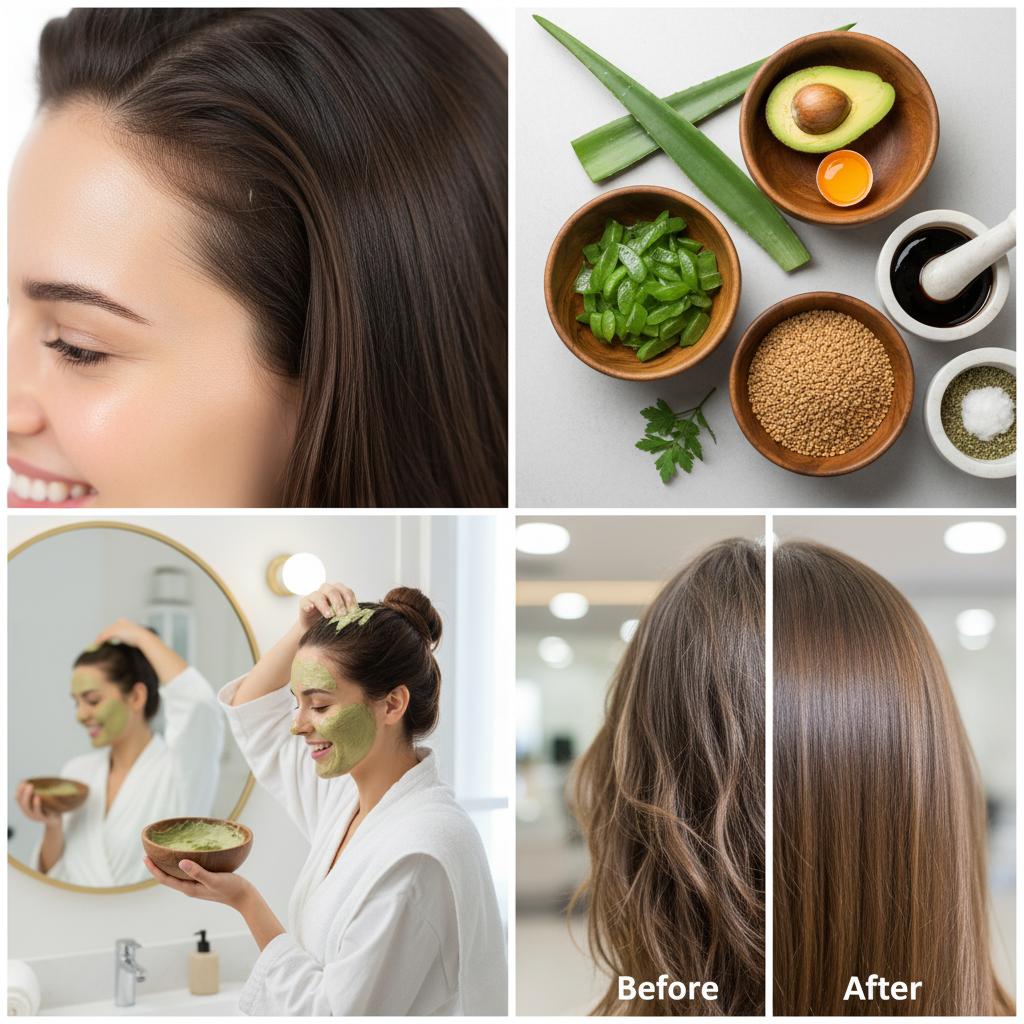
Here are a few simple yet powerful home remedies for hair growth you can easily prepare. Always perform a patch test on a small area of your skin 24 hours before applying any new ingredient to your scalp to check for allergic reactions.
Nourishing Aloe Vera and Coconut Oil Mask
This mask is deeply hydrating and soothing for the scalp. Aloe vera contains enzymes that can repair dead skin cells, while coconut oil’s fatty acids penetrate the hair shaft to reduce protein loss.
- Ingredients: 2 tablespoons of pure aloe vera gel and 1 tablespoon of melted virgin coconut oil.
- Instructions: Mix the ingredients well. Apply the mixture to your scalp and hair, focusing on the roots. Leave it on for 30-45 minutes, then rinse and shampoo as usual. Use once a week.
Strengthening Onion Juice Treatment
Onion juice is rich in dietary sulfur, a component of the protein keratin. While the smell is strong, its potential benefits for promoting growth and preventing thinning are well-regarded in natural hair care circles.
- Ingredients: 1 medium-sized onion.
- Instructions: Peel and chop the onion, then blend it into a pulp. Strain the pulp through a cheesecloth to extract the juice. Apply the juice directly to your scalp using a cotton ball. Leave it on for 15-30 minutes before washing thoroughly with shampoo. Use once or twice a week.
Clarifying Green Tea Rinse
Green tea is rich in antioxidants, particularly EGCG (epigallocatechin gallate), which can support scalp health and stimulate hair follicles.
- Ingredients: 1-2 green tea bags and 2 cups of hot water.
- Instructions: Steep the tea bags in hot water for 10 minutes and let it cool completely. After shampooing and conditioning, pour the cooled tea over your scalp and hair as a final rinse. Do not rinse it out. Do this once a week.
Harnessing Nature: A Guide to Herbs and Oils
Certain oils and herbs have been used for centuries to promote hair growth. They work by stimulating follicles, improving circulation, and providing essential nutrients.
Essential Oils for Stimulation
Essential oils are highly concentrated and must always be diluted in a carrier oil before application to the scalp.
- Rosemary Oil: One of the most effective oils for hair growth. Some studies suggest it can be as effective as minoxidil for promoting growth, likely by improving circulation and protecting follicles.
- Peppermint Oil: Creates a cooling, tingling sensation as it increases circulation to the area it is applied to. This can help promote growth during the anagen phase.
- How to Use: Add 3-5 drops of rosemary or peppermint essential oil to 1 tablespoon of a carrier oil. Massage into the scalp and leave on for at least 30 minutes before washing.
Carrier Oils for Nourishment
- Coconut Oil: Its molecular structure allows it to penetrate the hair shaft, providing deep moisture.
- Castor Oil: Rich in ricinoleic acid, it has anti-inflammatory and moisturizing properties that support a healthy scalp environment.
- Jojoba Oil: Its composition is very similar to the scalp’s natural sebum, making it an excellent moisturizer that does not clog pores.
Personalized Hair Care: Weekly Routines for Your Hair Type
Consistency is key. Tailoring your routine to your hair type will yield the best results. Here are some sample weekly routines to get you started.
| Hair Type | Weekly Goal | Routine Steps |
|---|---|---|
| Fine or Oily Hair | Clarify and stimulate without weighing hair down. | – Scalp massage (daily, 5 mins). – Green tea rinse (1x a week). – Lightweight oil treatment (jojoba with peppermint oil) 1x a week, pre-shampoo. |
| Dry or Thick Hair | Deeply moisturize and strengthen strands. | – Scalp massage with castor oil (3x a week). – Aloe vera and coconut oil mask (1x a week). – Use a small amount of oil on ends to seal moisture post-wash. |
| Normal Hair | Maintain balance and support steady growth. | – Scalp massage (daily, 5 mins). – Alternate weekly between an aloe mask and a rosemary oil treatment. |
Common Habits That Hinder Hair Growth (And How to Fix Them)
Even the best home remedies for hair growth can be undermined by damaging habits. Identifying and correcting these can significantly improve your results.
Heat Styling and Chemical Treatments
Excessive use of flat irons, curling wands, and chemical treatments like dyeing and relaxing can damage the hair’s protein structure, leading to breakage. Solution: Minimize heat styling, always use a heat protectant, and explore gentler coloring options.
Tight Hairstyles
Hairstyles that constantly pull on the hair follicles, such as tight ponytails, braids, or buns, can cause a type of hair loss called traction alopecia. Solution: Opt for looser styles and give your hair breaks from being pulled back.
Poor Diet and High Stress
As mentioned in the nutrition section, a poor diet starves your follicles of the nutrients they need. Similarly, high levels of chronic stress can push more hair follicles into the resting (telogen) phase, leading to increased shedding. Solution: Prioritize a balanced diet and incorporate stress-management techniques like meditation, exercise, or yoga. For general health guidance, resources like the NHS provide practical hair care guidance.
When Home Remedies Aren’t Enough: Seeking Professional Advice
While home remedies can be very effective for supporting general hair health, they are not a cure for underlying medical conditions. It is important to know when to consult a doctor or dermatologist.
Signs You Should See a Professional
- Sudden or rapid hair loss.
- Bald patches appearing on your scalp.
- Hair loss accompanied by scalp itching, burning, or pain.
- Significant shedding that continues for more than three months despite lifestyle changes.
A professional can perform blood tests to check for nutritional deficiencies or hormonal imbalances and conduct a thorough scalp examination to diagnose conditions like alopecia areata or fungal infections.
Frequently Asked Questions About Home Remedies for Hair Growth
How long does it take to see results from home remedies?
Patience is essential. Given the hair growth cycle, it typically takes at least 3 to 6 months of consistent application and healthy habits to notice a visible difference in hair thickness or growth.
Can I mix different home remedies together?
It is best to introduce one new remedy at a time to see how your scalp and hair react. Once you know you are not sensitive to individual ingredients, you can combine them. For example, adding rosemary oil to your aloe vera mask is a great combination.
Are these remedies safe for color-treated hair?
Most of these remedies are safe. However, some ingredients, like certain oils, can slightly alter or strip color over time. Always do a strand test on a small, hidden section of your hair first.
Your Hair Growth Checklist and Next Steps
Embarking on a natural hair growth journey is an exciting act of self-care. Use this checklist to guide your first steps and stay on track.
- Assess Your Diet: Am I eating enough protein, iron, and other key nutrients?
- Start with Scalp Care: Incorporate a 5-minute daily scalp massage into your routine.
- Choose One Remedy: Pick one DIY mask or oil treatment from this guide and commit to using it once a week for a month.
- Reduce Damaging Habits: Identify one habit, like heat styling or tight ponytails, and work on reducing it.
- Be Patient and Consistent: Track your progress with photos and remember that healthy hair growth takes time.
By following this guide, you are well-equipped with the knowledge and tools to effectively use home remedies for hair growth. For more ideas and community support, you can explore platforms like Rich Hair UK. Here’s to a future of healthier, stronger hair!