The Ultimate Guide to Curly Hair Nutrition: Eat Your Way to Healthier Curls in 2025
Table of Contents
- Why diet matters for curl shape and resilience
- How hair structure in curls differs from straight hair
- Essential nutrients for curl health
- Hydration, electrolytes and scalp moisture
- Practical meal ideas to feed your curls
- 4-week curl-nourish eating plan with shopping list
- Snack and smoothie recipes for curl maintenance
- When to consider supplements and how to choose them
- Tracking progress: what to measure and when
- Common myths about food and curly hair
- Further reading and trusted resources
If you have curly hair, you know that the quest for defined, frizz-free, and healthy curls can feel like a full-time job. You’ve likely tried every cream, gel, and deep conditioner on the market. But what if the secret to your best-ever curls isn’t in a bottle, but on your plate? Welcome to the world of curly hair nutrition, an inside-out approach that builds the foundation for strong, resilient, and beautiful hair. This guide will walk you through exactly how the foods you eat directly impact your curls and provide a practical four-week plan to help you eat your way to the hair of your dreams.
Why diet matters for curl shape and resilience
Think of your hair follicles as tiny factories. For these factories to produce high-quality hair strands, they need a consistent supply of specific raw materials. These materials—vitamins, minerals, proteins, and fats—come directly from your diet. When your body is well-nourished, your hair follicles receive everything they need to construct strong, elastic hair shafts that can hold a curl pattern and resist damage. A poor diet, on the other hand, can lead to weak, brittle strands that are prone to frizz, breakage, and a loss of definition. Effective curly hair nutrition isn’t about restriction; it’s about strategically adding nutrient-dense foods that directly support hair health from the root.
How hair structure in curls differs from straight hair
Understanding why curls need extra nutritional support starts with their unique structure. Unlike the round follicles that produce straight hair, curly hair grows from oval-shaped follicles. This shape causes the hair strand to grow out at an angle, creating its characteristic bends and coils. The points where the hair curves are structurally weaker and more susceptible to damage. Furthermore, the natural oils produced by the scalp (sebum) have a harder time traveling down the winding path of a curly hair strand. This leads to drier ends and a greater need for both internal and external moisture. Because of this inherent fragility, a solid foundation of curly hair nutrition is not just beneficial—it’s essential for preventing breakage and maintaining healthy elasticity.
Essential nutrients for curl health
To build a robust diet for your curls, you need to focus on a few key nutrient groups. Each one plays a specific role in the hair growth cycle and the structural integrity of the hair itself.
Protein and amino acids for shaft strength
Your hair is made of approximately 95% protein, specifically a fibrous protein called keratin. To produce keratin, your body needs amino acids, which are the building blocks of protein. A diet lacking in protein can result in hair that is weak, brittle, and grows slowly. Including high-quality protein sources ensures your hair follicles have the necessary materials to build strong, resilient strands.
- Key Sources: Lean meats (chicken, turkey), fish, eggs, dairy products (Greek yogurt, cottage cheese), legumes (lentils, chickpeas), beans, and tofu.
- Did You Know? According to a study on the role of nutrition in hair health, protein deficiency is a well-documented cause of hair loss and weakness, highlighting its importance in any hair care regimen.
Healthy fats for shine and elasticity
Healthy fats, particularly omega-3 fatty acids, are crucial for scalp health and hair shine. They are an integral part of cell membranes in your scalp and help produce the natural oils that keep your hair and scalp hydrated. This lubrication is vital for curly hair, which tends to be naturally dry. Adequate intake of healthy fats contributes to hair’s elasticity, preventing it from becoming brittle and snapping.
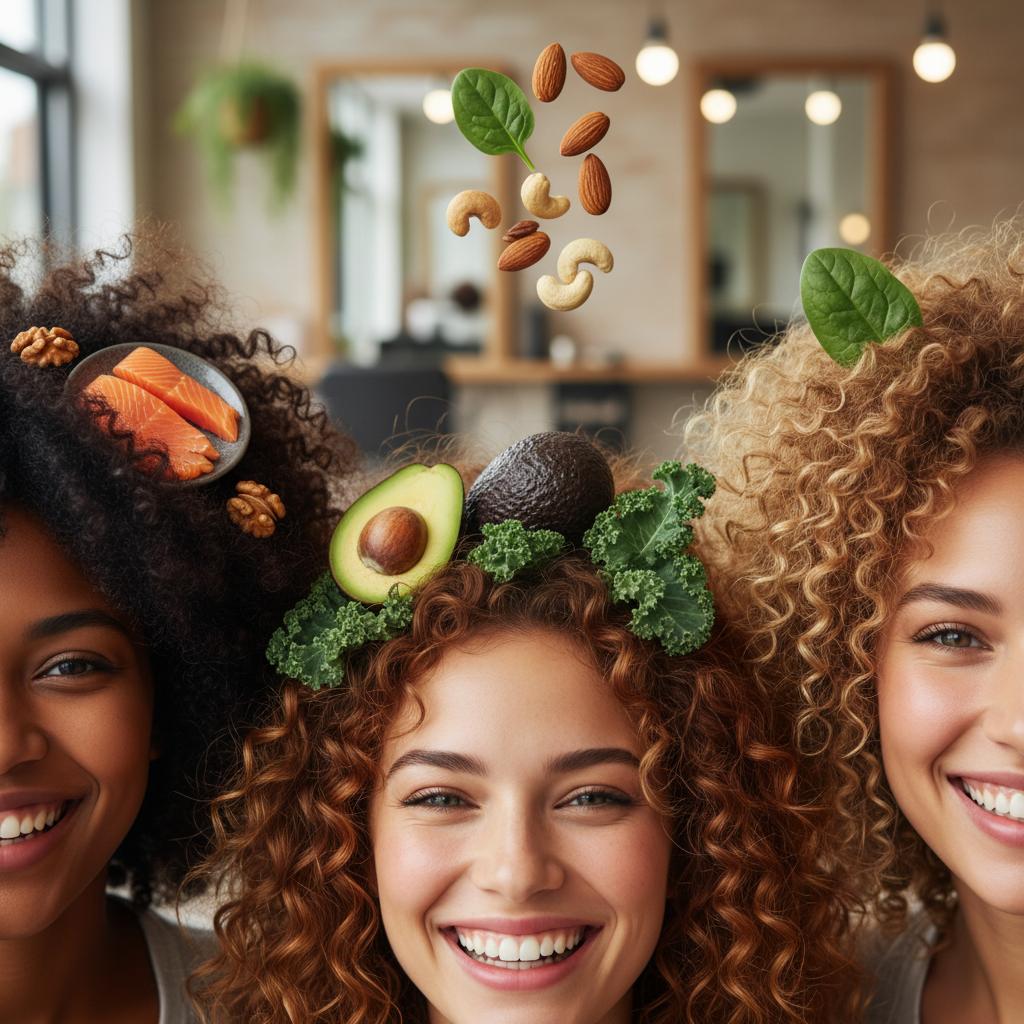
- Key Sources: Fatty fish (salmon, mackerel, sardines), avocados, nuts (walnuts, almonds), seeds (flaxseeds, chia seeds), and olive oil.
- The Science: Research indicates that supplementing with omega-3s and omega-6s can improve hair density and reduce hair loss, showcasing their powerful benefits.
Vitamins that support scalp and follicle function
Vitamins are the spark plugs of your body’s cellular processes, including those that govern hair growth. Several vitamins are particularly important for a healthy scalp and productive hair follicles.
- Biotin (Vitamin B7): Perhaps the most famous hair vitamin, biotin is essential for keratin production. While deficiency is rare, ensuring adequate intake supports hair strength. Find it in eggs, nuts, seeds, and sweet potatoes. You can learn more from the Biotin fact sheet from the NIH Office of Dietary Supplements.
- Vitamin C: A powerful antioxidant that protects hair follicles from damage by free radicals. It’s also vital for creating collagen, a protein that strengthens hair and prevents it from becoming brittle. Find it in citrus fruits, bell peppers, strawberries, and broccoli.
- Vitamin E: Another potent antioxidant that helps maintain scalp health and circulation, creating a better environment for hair to grow. Find it in spinach, avocados, and sunflower seeds.
Minerals that prevent breakage
Minerals are just as important as vitamins in the curly hair nutrition equation, playing key roles in the hair growth cycle and preventing hair loss.
- Iron: Iron deficiency (anemia) is a major cause of hair loss, especially in women. Iron helps red blood cells carry oxygen to your cells, including the hair follicles. Get it from red meat, spinach, lentils, and fortified cereals.
- Zinc: This mineral is crucial for hair tissue growth and repair. It also helps keep the oil glands around the follicles working correctly. A lack of zinc can lead to hair shedding. Find it in oysters, beef, pumpkin seeds, and lentils.
Hydration, electrolytes and scalp moisture
You can’t talk about moisture without talking about water. Dehydration affects your entire body, and your hair is no exception. When you’re dehydrated, your body prioritizes vital organs, leaving hair follicles with less moisture. This can result in a dry scalp and brittle, lackluster curls. Aim to drink plenty of water throughout the day. Additionally, electrolytes like potassium and magnesium help regulate hydration and nutrient absorption at a cellular level. Foods like bananas, coconut water, and leafy greens are excellent sources of electrolytes, enhancing your hydration efforts and supporting overall scalp health.
Practical meal ideas to feed your curls
Incorporating these nutrients into your diet is easier than you think. Here are a few simple meal ideas to get you started on your curly hair nutrition journey:
- Breakfast: A scramble of two eggs with spinach and a side of avocado on whole-wheat toast. This covers protein, iron, Vitamin E, and healthy fats.
- Lunch: A large salad with grilled chicken or chickpeas, mixed greens, bell peppers, and a lemon-tahini dressing. This provides protein, Vitamin C, and zinc.
- Dinner: Baked salmon with a side of roasted sweet potatoes and broccoli. This meal is packed with omega-3s, biotin, and Vitamin C.
4-week curl-nourish eating plan with shopping list
This 2025 plan is designed to be a progressive focus, not a restrictive diet. Each week, you’ll concentrate on adding specific nutrient-rich foods to your existing meals. The goal is to build sustainable habits for long-term curl health.
| Week | Focus | Foods to Incorporate |
|---|---|---|
| Week 1 | Protein Power-Up | Focus on adding a high-quality protein source to every meal. Think eggs for breakfast, lentils in your lunch salad, and fish or tofu for dinner. |
| Week 2 | Healthy Fats and Hydration | Incorporate a source of healthy fat daily (a handful of walnuts, half an avocado). Increase your water intake and add one electrolyte-rich food like a banana each day. |
| Week 3 | Vitamin and Mineral Boost | Aim to “eat the rainbow.” Add at least two brightly colored vegetables or fruits to your lunch and dinner, like bell peppers, strawberries, or leafy greens. |
| Week 4 | Integration and Maintenance | Combine the habits from the previous weeks. Strive for balanced meals that include a protein, a healthy fat, and plenty of colorful produce. This is your new baseline for optimal curly hair nutrition. |
Your Curl-Nourish Shopping List:
- Proteins: Eggs, Greek yogurt, chicken breast, salmon, lentils, chickpeas, tofu.
- Healthy Fats: Avocados, walnuts, almonds, chia seeds, flaxseeds, olive oil.
- Fruits: Berries (strawberries, blueberries), citrus fruits (oranges, lemons), bananas.
- Vegetables: Spinach, kale, sweet potatoes, bell peppers, broccoli.
- Pantry: Quinoa, whole-wheat bread, pumpkin seeds.
Snack and smoothie recipes for curl maintenance
Keep your curls nourished between meals with these simple and delicious options.
The “Curl Strength” Smoothie
- 1 scoop of unflavored or vanilla protein powder
- 1 cup spinach
- 1/2 banana
- 1 tablespoon of chia seeds
- 1 cup of unsweetened almond milk
- Blend until smooth. This smoothie delivers protein, iron, electrolytes, and omega-3s.
Nutrient-Dense Trail Mix
- Combine 1 cup of walnuts and almonds (healthy fats, protein) with 1/4 cup of pumpkin seeds (zinc) and 1/4 cup of dried apricots (iron). It’s a perfect on-the-go snack.
When to consider supplements and how to choose them
While a food-first approach is always best for curly hair nutrition, supplements can be helpful if you have a diagnosed deficiency or specific dietary restrictions. Common supplements for hair health include biotin, iron, vitamin D, and zinc. However, it is crucial to consult with a doctor or registered dietitian before starting any supplement regimen. They can perform blood tests to identify any deficiencies and recommend the correct dosage. Taking supplements you don’t need can be ineffective and sometimes harmful.
Tracking progress: what to measure and when
Change won’t happen overnight, but with consistent nutritional effort, you should see improvements within a few weeks to months. Here’s what to look for:
- Take “Before” Photos: On day one, take clear photos of your hair from the front, side, and back in natural light.
- Weekly Check-ins: At the end of each week, make a note of any changes. Are your curls clumping together more easily? Is there less frizz in your canopy?
- Monthly Comparison: After four weeks, take new photos in the same lighting and compare them to your “before” shots. Look for tangible improvements in shine, definition, and overall health. You might also notice less hair shedding in your brush or in the shower.
Common myths about food and curly hair
Let’s debunk a few common misconceptions about food and hair health.
- Myth 1: You just need to apply oils to your hair. While topical oils can seal in moisture, they can’t repair hair from the inside. True, lasting moisture and strength come from consuming healthy fats and adequate water.
- Myth 2: Eating gelatin or collagen directly builds stronger hair. While your body uses the amino acids from collagen, it breaks them down and reassembles them as needed. Eating a varied diet rich in protein sources is more effective than relying on a single supplement.
- Myth 3: More biotin is always better. Your body only needs a certain amount of biotin. Unless you are deficient, taking mega-doses is unlikely to produce dramatic results and will mostly be excreted. Focus on a balanced diet instead.
Further reading and trusted resources
Building a healthy diet is a journey, and it’s always wise to consult official sources for guidance. For more general information on how diet impacts hair, the NHS provides excellent advice on healthy eating for your hair. For personalized advice, consider speaking with a registered dietitian or a dermatologist who specializes in hair and scalp health. They can provide tailored recommendations based on your individual needs and health profile.