
Table of Contents
- Why Nighttime Hair Care Produces Visible Results
- Determine Your Hair Profile and Nightly Needs
- To Wash or Not to Wash Before Bed
- Low-Manipulation Protective Styles for Sleep
- Simple Overnight Nourishing Masks and How to Make Them
- Choosing Sleep-Friendly Fabrics and Pillowcase Care
- Adjusting Routines for Curls, Straight Hair and Colour-Treated Hair
- A Seven-Night Sample Routine for Different Goals
- Common Overnight Care Mistakes and Fixes
- Ingredient Quick Guide: What to Look For and What to Avoid
- Frequently Asked Questions
- Further Reading and Resources
Why Nighttime Hair Care Produces Visible Results
Have you ever wondered if you could wake up with healthier, more manageable hair? The secret might not be in a complex morning routine, but in what you do before you go to sleep. An effective overnight hair care routine leverages the body’s natural restorative state during sleep, giving you eight uninterrupted hours to nourish, protect, and transform your hair. While you rest, your body is in peak repair mode, and this extends to your hair and scalp.
The primary benefits of a dedicated nighttime routine are twofold: protection and treatment. Tossing and turning on a standard cotton pillowcase creates friction, leading to frizz, tangles, and even breakage. A proper overnight hair care strategy minimises this mechanical damage. Furthermore, applying treatments like serums, oils, or masks at night allows the ingredients to penetrate the hair shaft and scalp deeply without interruption from environmental factors like sun or wind. This extended application time means you can tackle issues like dryness, brittleness, and dullness far more effectively, making your morning styling session quicker and easier.
Determine Your Hair Profile and Nightly Needs
Before you can build the perfect routine, you need to understand what your hair truly needs. Your hair profile is determined by its porosity, texture, and your scalp’s condition. Getting this right is the foundation of successful overnight hair care.
Hair Porosity: How Your Hair Absorbs Moisture
Porosity refers to your hair’s ability to absorb and retain moisture. It’s a crucial factor in choosing the right products.
- Low Porosity: The cuticle layer is tightly packed. Hair is often shiny but resists moisture. It’s prone to product buildup because products tend to sit on top rather than absorb. Your goal is to use lightweight products that won’t weigh hair down.
- High Porosity: The cuticle is open, so hair easily absorbs moisture but loses it just as quickly. This hair type is often dry, frizzy, and prone to breakage. Your goal is to seal in moisture with richer creams or oils.
A simple test: spray a small section of clean, dry hair with water. If the beads of water sit on top, you likely have low porosity. If the hair absorbs the water quickly, you have high porosity.
Hair Texture and Scalp Condition
Your hair’s texture (fine, medium, coarse) and scalp type (oily, dry, balanced) also dictate your needs.
- Fine Hair: Easily weighed down. Focus on protecting ends from tangles and using very light products.
- Coarse Hair: Can handle heavier products. Focus on deep hydration and frizz control.
- Oily Scalp: Avoid applying oils or heavy creams near the roots. A protective style can help prevent the scalp’s oils from spreading down the hair shaft overnight.
- Dry Scalp: A gentle scalp massage with a drop of jojoba oil before bed can provide relief and promote circulation.
To Wash or Not to Wash Before Bed
The question of whether to wash your hair at night is common. Washing at night can be a great time-saver, but it comes with a critical rule: never sleep on soaking wet hair. A damp scalp can create a warm, moist environment, which is a breeding ground for fungus or bacteria, potentially leading to dandruff or scalp irritation. Furthermore, hair is at its most fragile when wet, making it highly susceptible to breakage from friction against your pillow.
If you choose to wash your hair in the evening, aim to let it air-dry or use a diffuser on low heat until it is at least 80% dry before your head hits the pillow. This simple step is a non-negotiable part of a healthy overnight hair care practice.
Low-Manipulation Protective Styles for Sleep
A protective style is any hairstyle that tucks away the ends of your hair, protecting them from tangling, friction, and damage while you sleep. The key is to keep it loose and comfortable—anything that pulls on your scalp can lead to traction alopecia, a form of hair loss.
For Straight or Wavy Hair
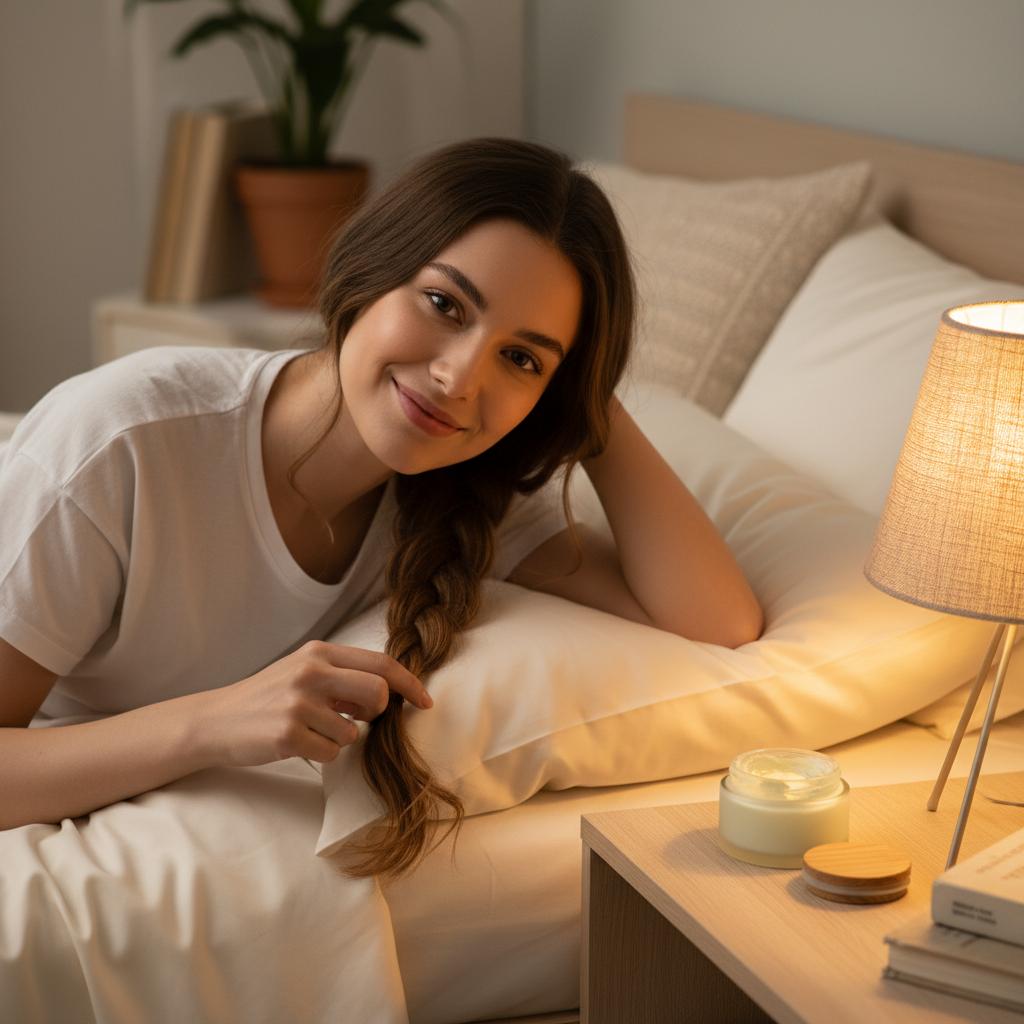
- Loose Braid: A classic, simple plait keeps hair contained and can create gentle waves by morning.
- Low Ponytail or Bun: Secure hair loosely at the nape of your neck with a soft tie, like a silk or satin scrunchie. Avoid tight elastic bands.
- The “Pineapple”: While often associated with curly hair, this can work for long straight hair too. Gather hair into a very high, loose ponytail on top of your head to keep ends off your neck and pillow.
For Curly or Coily Hair
- The “Pineapple”: This is a go-to for preserving curl patterns. Gather curls into a high, loose ponytail on top of your head, allowing the curls to spill forward.
- Twists or Braids: Two or more loose twists or braids can help prevent matting and keep curls defined.
- Bantu Knots: For coily hair, sectioning the hair into loose Bantu knots can protect the ends and maintain curl definition without stretching them too much.
Simple Overnight Nourishing Masks and How to Make Them
You don’t need complex formulas for an effective overnight treatment. A simple, nourishing mask can be made with ingredients you may already have. The key is to use them sparingly—a little goes a long way. Focus application on the mid-lengths and ends, avoiding the scalp unless you are specifically addressing dryness.
DIY Treatment Ideas
- For Dryness and Frizz: Warm a few drops of argan or jojoba oil between your palms and smooth it over the bottom half of your hair. These oils are lightweight and rich in vitamins.
- For Moisture Retention: Mix a tablespoon of pure aloe vera gel with a few drops of glycerine. Aloe is a natural humectant, meaning it draws moisture into the hair.
- For Damaged Ends: A very light coating of avocado oil on your ends can provide fatty acids that help strengthen and soften brittle hair.
When applying any overnight hair care treatment, protect your pillowcase by wearing a silk or satin bonnet, scarf, or a reusable shower cap.
Choosing Sleep-Friendly Fabrics and Pillowcase Care
The surface your hair rests on for eight hours a night matters immensely. Traditional cotton pillowcases are highly absorbent, wicking moisture away from your hair and skin. Their slightly rough texture also creates friction, leading to frizz, tangles, and breakage.
Switching to a smoother fabric can be one of the most impactful changes you make.
- Silk: The gold standard. It’s a natural protein fibre that is incredibly smooth, causing minimal friction. It helps hair retain its natural moisture.
- Satin: A more affordable alternative. Satin is a weave, not a fibre, but it offers a similarly smooth surface to silk, reducing friction and moisture loss.
Pillowcase vs. Bonnet vs. Scarf
A silk or satin pillowcase is a great starting point. If you want maximum protection, especially for curly or coily hair, consider a bonnet or scarf. These keep your hair fully contained, protecting it from all movement and ensuring treatments stay on your hair, not your pillow. Regardless of your choice, remember to wash your pillowcase or head covering regularly to prevent the buildup of oils and products, which can lead to skin and scalp issues.
Adjusting Routines for Curls, Straight Hair and Colour-Treated Hair
A one-size-fits-all approach doesn’t work for overnight hair care. Here’s how to tailor your routine to your specific hair type.
For Curly Hair (Types 3-4)
The main goals are moisture retention and curl preservation. After applying a leave-in conditioner or curl cream, protect your hair using the pineapple method inside a satin bonnet or scarf. This prevents curls from being crushed and frizzy. Some people “refresh” their curls with a light spritz of water in the evening before styling for sleep.
For Straight Hair (Type 1)
The focus here is on preventing oiliness at the roots and avoiding tangles and flat, lifeless hair in the morning. A light spritz of dry shampoo at the roots before bed can absorb excess oil. Style in a loose braid to prevent tangles and add a bit of texture. A silk pillowcase is essential to prevent frizz without weighing hair down.
For Colour-Treated Hair
Colour-treated hair is often more porous and prone to dryness. Your overnight hair care should prioritise hydration and colour protection. Use a colour-safe leave-in conditioner or a lightweight oil on the ends. Avoid heavy, penetrating oils like coconut oil in large quantities, as they can sometimes cause colour to fade faster. Protecting hair in a loose style on a silk pillowcase is crucial to prevent cuticle damage that leads to colour loss.
A Seven-Night Sample Routine for Different Goals
Here is a sample weekly plan, starting in 2025, to show how you can vary your overnight hair care to meet specific goals. Adjust based on your hair’s needs.
| Day | Goal: Moisture Boost | Goal: Volume and Freshness |
|---|---|---|
| Night 1 | Apply a few drops of argan oil to ends. Protect with a loose braid. | Lightly mist roots with dry shampoo. Sleep with hair in a loose top knot. |
| Night 2 | Protective style (pineapple) on a silk pillowcase. No extra product. | Brush hair thoroughly. Sleep with hair loose on a silk pillowcase. |
| Night 3 | Apply a lightweight leave-in conditioner. Secure in twists. | Protective style (loose braid) to create morning waves. |
| Night 4 | (Wash Day) Ensure hair is 80% dry. Apply leave-in and use a bonnet. | (Wash Day) Ensure hair is 80% dry. Sleep with hair loose. |
| Night 5 | Aloe vera gel mask on ends. Cover with a cap or bonnet. | Repeat Night 1: dry shampoo at roots and a top knot. |
| Night 6 | Protective style only. Give hair a break. | Protective style only. Give hair a break. |
| Night 7 | Assess hair. Add a drop of oil if ends feel dry. | Assess hair. Sleep with hair loose to prepare for morning styling. |
Common Overnight Care Mistakes and Fixes
- Mistake: Using tight, elastic hair ties. This creates tension and can cause breakage right at the band line.
Fix: Switch to soft, fabric scrunchies (preferably silk or satin) or coil hair ties that distribute pressure more evenly. - Mistake: Applying too much product. Over-oiling or using heavy creams can lead to greasy, weighed-down hair and buildup.
Fix: Start with a pea-sized amount of product. You can always add more. Focus application on the ends, which are the oldest and driest part of your hair. - Mistake: Forgetting about your scalp. A healthy scalp is the foundation of healthy hair.
Fix: Spend one minute before bed gently massaging your scalp with your fingertips to stimulate blood flow. Avoid using your nails. - Mistake: Sleeping in a style that is too tight or uncomfortable.
Fix: Your protective style should be loose enough that you don’t feel any pulling or tension. Comfort is key for both your hair and your sleep quality.
Ingredient Quick Guide: What to Look For and What to Avoid
Navigating product labels can be tricky. Here’s a quick guide for your overnight hair care products.
Beneficial Ingredients to Look For
- Humectants: Glycerine, aloe vera, and hyaluronic acid draw moisture into the hair.
- Natural Oils: Argan, jojoba, avocado, and sweet almond oils are excellent for sealing moisture and adding nutrients.
- Proteins: Hydrolyzed silk, wheat, or keratin proteins can help patch up gaps in the hair cuticle, strengthening it. (Use in moderation, as too much protein can cause stiffness).
- Ceramides: These lipids help flatten the cuticle and make hair feel smoother and stronger.
Ingredients to Use with Caution or Avoid
- Drying Alcohols: Alcohols like denatured alcohol or isopropyl alcohol can be very drying. They are different from fatty alcohols (like cetyl alcohol), which are moisturising.
- Heavy Silicones: Ingredients ending in “-cone” (like dimethicone) can provide great slip but may build up over time, preventing moisture from penetrating the hair. Look for water-soluble silicones if you prefer them.
- Sulphates: Typically found in shampoos, they should be avoided in leave-in overnight products as they can be stripping and harsh.
Frequently Asked Questions
- Is overnight hair care necessary for everyone?
- While everyone can benefit from reducing friction with a silk pillowcase, those with long, dry, curly, or damaged hair will see the most dramatic results from a dedicated overnight hair care routine.
- Can I leave a regular deep conditioner or hair mask on all night?
- It’s best to use products specifically designed for overnight use. Some rinse-out conditioners can over-soften the hair if left on too long, leading to hygral fatigue (damage from excessive swelling with water). Stick to lightweight leave-ins, oils, or designated overnight masks.
- How do I protect my bedding from oily treatments?
- A silk or satin bonnet, scarf, or an old t-shirt wrapped around your hair (a “plop”) works wonders. You can also place an old towel over your pillow for extra protection.
- Will a silk pillowcase really make a difference?
- Yes. For many, it’s a game-changer. The reduced friction means less frizz, fewer tangles, and less breakage over time. It helps both your hair and skin retain moisture.
Further Reading and Resources
Building a great hair care routine is a journey of understanding. For more science-backed information on hair health and common concerns, we recommend exploring these trusted resources:
-
NHS Hair Loss Information: For comprehensive, medically reviewed information on hair loss causes and treatments, visit the NHS website.
-
American Academy of Dermatology: The AAD offers practical tips for everyday hair care and advice on managing various conditions. Explore their hair care guidance.
-
DermNet: A valuable resource for dermatological information, including detailed topics on hair and scalp health. You can find more on their hair care topics page.


