Quick overview — why overnight care matters
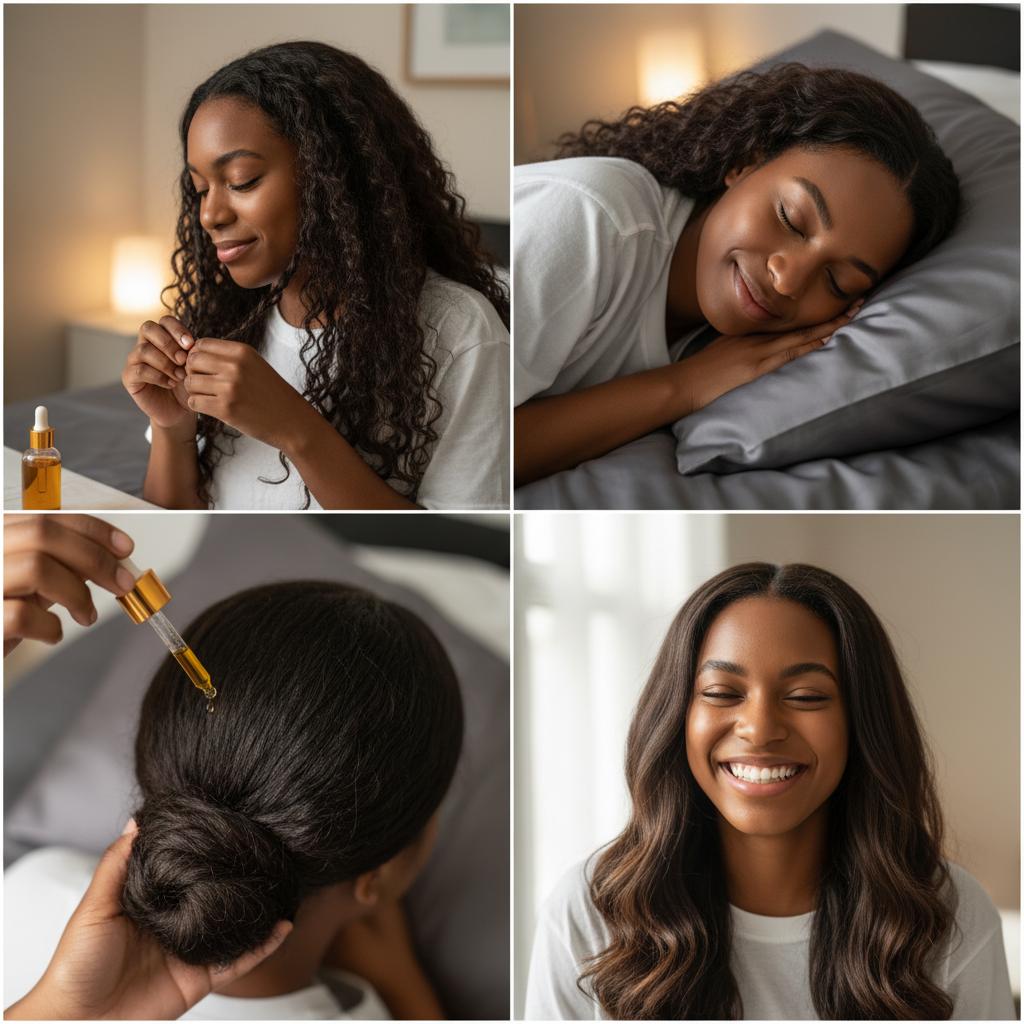
You’ve probably heard of “beauty sleep” for your skin, but what about for your hair? The eight hours you spend asleep are a golden opportunity for repair and protection. Overnight hair care is the practice of using this downtime to nourish, hydrate, and shield your strands from damage. While you rest, your body is in a state of regeneration, making it the perfect time for treatments to deeply penetrate the hair shaft without interruption from environmental stressors like sun, wind, or pollution.
The core benefits are simple yet powerful. Firstly, it saves you precious time in the morning. A well-planned nighttime routine means you wake up with hair that’s already prepped, detangled, and manageable. Secondly, it prevents mechanical damage. Tossing and turning on a standard cotton pillowcase can cause friction, leading to frizz, tangles, and breakage. A smart overnight hair care strategy minimises this damage. Finally, it allows for deep conditioning. Products left in for 6-8 hours have more time to work their magic, delivering a higher concentration of nutrients than a quick 5-minute conditioner ever could.
How to evaluate your hair needs before bed
Before you grab the nearest oil or cream, take a moment to understand what your hair is asking for. A successful overnight hair care routine is not one-size-fits-all; it’s a personalised prescription for your unique hair type and concerns. Start by identifying your hair’s primary characteristics.
Here’s a simple way to assess your needs:
- Check for Dryness: Does your hair feel rough or brittle? Does it snap easily when you gently pull a strand? This indicates a need for moisture and hydration. Your focus should be on deep conditioning treatments and sealing oils.
- Assess Oiliness: Does your scalp feel greasy less than 24 hours after washing? If so, you’ll want to avoid heavy products at the root. A lightweight scalp treatment or simply protecting your ends might be your best bet.
- Look for Frizz and Flyaways: Frizz is often a sign that the hair cuticle is raised and needs moisture. It can also be caused by friction. Serums, creams, and protective sleeping styles will be your allies.
- Identify Damage: Split ends, a dull appearance, and a “gummy” feel when wet are all signs of damage, often from heat styling or chemical treatments. Your routine should prioritise protein and bond-repairing ingredients.
By taking a minute to perform this quick check-in each night, you can adjust your overnight hair care approach to give your hair exactly what it needs, ensuring you never over-moisturise fine hair or under-nourish coarse curls.
Nighttime products that actually help
The market is flooded with products promising overnight miracles. The key is to understand the ingredients and their functions. Looking ahead to 2026 and beyond, the focus is on targeted, effective formulas that work with your body’s natural restorative processes.
Oils and leave in serums — when to use them
Oils and serums might seem similar, but they serve different purposes in your overnight hair care regimen.
Hair oils, like argan, jojoba, or coconut oil, are primarily occlusive. This means their main job is to seal the hair cuticle, locking in existing moisture and preventing it from escaping overnight. They are best used on the mid-lengths and ends of dry, thick, or coarse hair. A few drops are usually all you need to reduce friction and add shine. Use them as the final step in your routine to seal in any hydrating products applied beforehand.
Leave-in serums are typically water-based or silicone-based and contain active ingredients designed to address specific concerns. A serum might contain hyaluronic acid for hydration, keratin for strength, or specialised botanical extracts for frizz control. They are generally more lightweight than oils and can be used by most hair types. Apply a serum to damp or dry hair before any oils to allow the active ingredients to penetrate the hair shaft effectively.
Lightweight night creams and scalp treatments
For those with fine hair or oily scalps, heavy oils can be counterproductive. This is where lightweight formulas shine.
Night creams for hair are emulsions that provide hydration without the weight of pure oils. They absorb quickly, delivering moisture and nutrients while you sleep, leaving hair soft and bouncy, not greasy. They are an excellent choice for fine or wavy hair that needs a moisture boost without being weighed down.
Scalp treatments are a critical, often-overlooked part of overnight hair care. A healthy scalp is the foundation for healthy hair. If you struggle with dryness, dandruff, or excess oil, an overnight scalp treatment can work wonders. Look for ingredients like tea tree oil for its antimicrobial properties, salicylic acid to exfoliate, or peptides to encourage healthy growth. Apply directly to the scalp and massage gently before bed.
Sleep styles that protect strands
How you wear your hair to bed is just as important as what you put in it. The goal is to minimise friction and tension, preventing tangles and breakage while you sleep.
Braids, twists and loose buns: pros and cons
Choosing a protective style is a cornerstone of any effective overnight hair care routine. Each has its benefits depending on your hair type and desired morning look.
- Loose Braids: A single, loose plait is fantastic for keeping long, straight, or wavy hair from tangling. Pros: Excellent tangle prevention, can create soft, heatless waves. Cons: Can leave kinks if braided too tightly and may not be suitable for very short hair.
- Twists: Two-strand twists are a gentler alternative to braids, especially for curly and coily textures. Pros: Less tension on the scalp, helps define natural curl patterns. Cons: May not hold as securely as braids on very straight or fine hair.
- Loose Buns (The “Pineapple”): This involves gathering your hair into a very high, loose bun on top of your head, secured with a soft scrunchie. It’s a go-to for curly and wavy hair. Pros: Protects curl patterns from being flattened, reduces frizz. Cons: Only works for medium to long hair.
The golden rule for any protective style is to keep it loose. A style that is too tight can cause tension and lead to traction alopecia over time.
Pillowcase fabrics and comfortable alternatives
Your pillowcase is in direct contact with your hair for hours. Traditional cotton pillowcases have a rough texture that can snag hair cuticles, absorb moisture, and create frizz-inducing friction. Making a simple switch can dramatically improve your hair’s health.
The best options are silk or satin. These fabrics have a smooth surface that allows your hair to glide over it as you move in your sleep. This drastically reduces friction, which in turn minimises frizz, tangles, and breakage. They also absorb less moisture than cotton, helping your hair and skin retain their natural hydration.
If a new pillowcase isn’t an option, consider these alternatives:
- Satin or Silk Bonnet: A bonnet fully encases your hair, offering total protection. It’s an excellent choice for preserving complex styles and for those with coily hair who need maximum moisture retention.
- Silk or Satin Scarf: Tying a scarf around your hair provides similar benefits to a bonnet and can be adjusted for a perfect fit.
Tailored nightly routines by hair type
The most effective overnight hair care is personalised. Here are some starting points for different hair textures.
Fine or straight hair
The goal is to hydrate and protect without weighing hair down.
- Brush hair gently to detangle and distribute natural oils.
- Apply a very small amount of a lightweight serum or hair cream to the ends only.
- Optional: If your roots get oily, a light mist of dry shampoo before bed can absorb excess oil overnight.
- Style in a single loose braid, secured with a silk or satin scrunchie.
- Sleep on a silk or satin pillowcase.
Wavy and curly textures
The focus here is on moisture, definition, and frizz control.
- Refresh hair with a light mist of water or a leave-in conditioner spray.
- Apply a curl cream or a few drops of a lightweight oil using the “praying hands” method to smooth the cuticle.
- Gather hair into a “pineapple” on top of your head.
- Protect with a silk scarf or bonnet, or sleep on a silk pillowcase.
Coily and textured hair
Maximum moisture retention and protection against breakage are the priorities.
- If hair feels dry, spritz lightly with water.
- Apply a leave-in conditioner followed by a sealing butter or a rich oil like castor or avocado oil (this is often called the LOC or LCO method).
- Style hair into several large twists or braids to prevent tangling and preserve texture.
- Cover completely with a satin bonnet or scarf for ultimate protection.
Simple DIY masks to try overnight
You don’t need expensive products to achieve great results. Your kitchen may hold the ingredients for a nourishing overnight hair care treatment. Always do a patch test on your skin before applying a new mixture.
- For Deep Hydration (All Hair Types): Mix two parts pure aloe vera gel with one part coconut or olive oil. Aloe vera is hydrating and soothing for the scalp, while the oil seals in moisture. Apply to damp hair, focusing on the ends.
- For Shine and Strength (Normal to Dry Hair): Whisk together two tablespoons of honey and three tablespoons of olive oil. Honey is a natural humectant, meaning it draws moisture into the hair. Apply to hair, cover with a shower cap or bonnet to avoid mess, and rinse thoroughly in the morning.
When using a DIY mask, always protect your pillowcase with a towel or wear a protective cap to bed.
Morning finishing steps for bounce and shine
Your morning routine should be quick and easy after effective overnight hair care.
- Gently Unravel: Carefully take down your braid, twists, or bun. Avoid pulling or tugging.
- Shake and Fluff: Use your fingers to gently separate and style your hair. Avoid brushing, especially for curly textures, as this can disrupt the pattern and cause frizz. A wide-tooth comb can be used if necessary.
- Refresh if Needed: For curls and waves, a light spritz of water or a curl refresher spray can reactivate the product from the night before and bring back bounce.
- Add Shine: A single drop of a lightweight finishing oil smoothed over the surface can tame any remaining flyaways and add a healthy sheen.
Weekly and monthly planning for lasting improvement
Consistency is the key to seeing long-term benefits from your overnight hair care routine. Think of it as a long-term wellness plan for your hair.
- Daily: Protective styling and a silk pillowcase/bonnet.
- Every 2-3 Nights: Application of a lightweight serum or oil to the ends, depending on your hair’s needs.
- Weekly: Dedicate one night to a more intensive treatment, like a DIY mask or a deep conditioning product.
- Monthly: If you use a lot of products, consider using a gentle clarifying shampoo to remove build-up so your overnight treatments can penetrate more effectively. Healthy hair is also supported from within; ensure your diet is rich in vitamins and minerals. For more information, explore resources on Hair Nutrition.
Troubleshooting common overnight problems
Even with the best intentions, you might encounter a few issues. Here’s how to solve them.
| Problem | Solution |
|---|---|
| Waking up with greasy hair | You’re likely using too much product or applying it too close to the roots. Reduce the amount and focus application strictly on the mid-lengths and ends. |
| Product staining the pillowcase | Wear a satin-lined bonnet or cap to create a barrier. Alternatively, drape an old towel over your pillow on nights you do a heavy treatment. |
| Hairstyle creates unwanted kinks | Your protective style is too tight. Loosen your braid or bun and always use a soft, fabric scrunchie instead of a thin elastic band. |
| Hair feels dry despite treatments | Your hair might have low porosity, meaning it resists moisture. Try applying treatments to slightly damp, warm hair to help open the cuticle. Also, ensure you’re sealing with an oil after applying a hydrating product. |
Short FAQ
Can I do overnight hair care every night?
Yes, but the intensity should vary. Protective elements like a silk pillowcase and a loose hairstyle are great for every night. Rich treatments and oils should be used a few times a week or as needed, based on your hair’s condition.
Is it bad to sleep with wet hair?
Sleeping with soaking wet hair is not ideal, as hair is at its most fragile when wet and more prone to breakage. It can also create a damp environment on the scalp that encourages fungal growth. If you must, let it air dry to at least 80% dry and put it in a loose braid.
What’s the best single product to start with for overnight hair care?
A silk or satin pillowcase is the single most impactful and lowest-effort starting point. It benefits all hair types by reducing friction and moisture loss, providing a passive but effective foundation for any overnight hair care routine.
Further resources and references
Building a healthy hair routine is a journey of discovery. For expert advice, high-quality products, and inspiration from hair care professionals, exploring a dedicated resource can be invaluable. Consider visiting reputable sources like Rich Hair UK for professional insights.
Remember that a holistic approach always yields the best results. A balanced diet, proper hydration, and gentle handling are just as important as the products you apply. For persistent scalp or hair loss issues, it’s always best to consult a doctor or a certified trichologist.