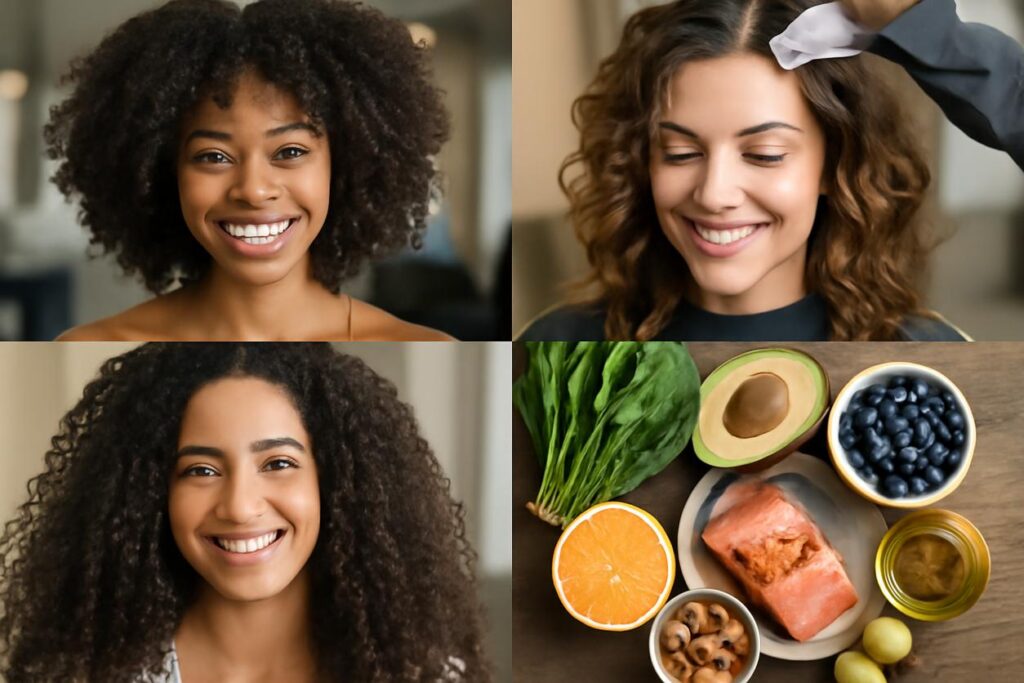
Welcome to your ultimate guide to embracing and enhancing your natural curls. Caring for curly hair can sometimes feel like solving a complex puzzle, but with the right knowledge and techniques, you can unlock a world of defined, healthy, and vibrant hair. This guide is packed with practical curly hair tips for beginners and those looking to refine their routine. We will move beyond just products, exploring how nutrition, simple kitchen remedies, and nighttime care create a holistic foundation for long-term hair health. Let’s dive into the essential strategies you will need in 2025 and beyond to make every day a great curl day.
Know your curl type and porosity
Before you can effectively care for your hair, you need to understand its unique characteristics. The two most important factors are your curl type and hair porosity. Knowing these will guide every decision you make, from cleansing to styling.
Curl type refers to the shape and size of your curl pattern. While it can be a spectrum, patterns are generally categorized as:
- Type 2 (Wavy): S-shaped waves that are closer to the head. They can range from fine and loose to coarse and more defined.
- Type 3 (Curly): Well-defined, springy curls that form loops. These can range from loose, loopy ringlets (3a) to tight, corkscrew-like curls (3c).
- Type 4 (Coily/Kinky): Tightly coiled hair that can form Z-shaped patterns or tight O-shaped coils. This hair type is often the most fragile and prone to dryness.
Even more critical than curl type is hair porosity, which is your hair’s ability to absorb and retain moisture. It is the single most important factor in choosing the right products and techniques.
- Low Porosity: The hair cuticle is tightly bound. Hair resists absorbing moisture but holds onto it well once absorbed. It is prone to product build-up.
- Medium Porosity: The cuticle is looser, allowing moisture to penetrate easily and be retained for a good amount of time. This is often considered the “ideal” porosity.
- High Porosity: The cuticle is open, meaning hair absorbs moisture quickly but also loses it just as fast. This hair type is often dry, frizzy, and prone to damage.
A simple way to test your porosity is the “spray test.” Spritz a small section of clean, dry hair with water. If the water beads up on the surface, you likely have low porosity. If it absorbs quickly, you have high porosity. If it sits for a minute before absorbing, you probably have medium porosity.
Hydration and gentle cleansing best practices
Hydration is the golden rule of curly hair care. Curls thrive on moisture, and traditional shampoos containing harsh sulfates can strip the hair of its natural oils, leading to dryness, frizz, and breakage. Opt for sulfate-free cleansers or consider co-washing (washing with conditioner only) to gently clean your scalp and hair without disrupting its moisture balance.
How often to wash based on curl density
How often you should wash your hair is a personal decision that depends on your lifestyle, scalp condition, and hair type. However, here are some general guidelines for anyone seeking effective curly hair tips:
- Fine or Wavy Hair (Type 2): Tends to get weighed down easily. Washing every 2-4 days with a gentle, sulfate-free shampoo often works well.
- Medium or Curly Hair (Type 3): Can typically go longer without washing. Aim for every 3-7 days, possibly incorporating a co-wash between shampoo days to refresh curls.
- Coarse or Coily Hair (Type 4): This hair type is the most prone to dryness. Washing once every 7-14 days is often sufficient to prevent stripping natural oils.
Always focus the cleanser on your scalp, where oil and build-up accumulate. Let the suds run down the lengths of your hair as you rinse, which is usually enough to cleanse them without causing excessive dryness.
Conditioning for definition without build up
Conditioner is a curly person’s best friend. It replenishes moisture, helps detangle knots, and smooths the hair cuticle to reduce frizz. When applying conditioner, make sure your hair is very wet to help it spread evenly. Use your fingers or a wide-tooth comb to gently detangle from the ends up to the roots. Never force a comb through a knot.
A popular technique is “squish to condish,” where you scrunch your hair upwards towards the scalp while rinsing. This encourages curl clumps to form and helps the hair absorb more moisture. Only rinse out about 80% of the conditioner, leaving a light film on the hair to act as a primer for your styling products.
Leave in techniques and cream versus gel choices
After rinsing, the next step is a leave-in product. This is non-negotiable for most curl types, as it provides a lasting layer of moisture and frizz protection.
- Leave-In Conditioner: Apply this first to soaking wet hair to lock in hydration.
- Curl Cream: Best for adding moisture, softness, and definition. Creams are great for those with dry, coarse hair or anyone who wants soft, touchable curls.
- Gel: Provides hold and creates a “cast” around your curls as they dry. This cast is what protects your curl pattern and prevents frizz. Once your hair is 100% dry, you gently “scrunch out the crunch” to reveal soft, defined, and long-lasting curls.
Many people find success by layering a cream for moisture and then a gel for hold. The key is to apply products to very wet hair for even distribution and minimal frizz.
Styling methods that preserve shape and movement
How you apply your styling products can make a huge difference in your final result. Instead of just slapping product on, try one of these proven methods on soaking wet hair:
- Praying Hands: Rub the product between your palms and then glide them down your hair shafts with your hair sandwiched between your hands. This smooths the cuticle and ensures even coverage.
- Raking: Use your fingers like a rake to distribute the product through your hair. This is great for separating curls but can sometimes break up curl clumps if overdone.
- Scrunching: Cup your ends and gently scrunch upwards towards the scalp. This encourages curl formation and is a fantastic way to apply gel or mousse.
Diffusing and air drying tips for lasting results
Once your product is applied, it’s time to dry. You have two main options:
Diffusing: A diffuser attachment on your blow dryer disperses the airflow to gently dry your curls without creating frizz. For best results, use a low speed and low-to-medium heat setting. Start by “hover diffusing” around your roots for volume, then switch to “pixie diffusing” where you place sections of your hair into the diffuser bowl and hold it against your scalp for 30-60 seconds.
Air-Drying: The gentlest method of all. To prevent your curls from being weighed down, you can use a technique called micro-plopping—gently scrunching your hair with a microfiber towel or cotton t-shirt to remove excess water before letting it air-dry. You can also use small clips at the roots to lift them while they dry, creating more volume.
Weekly treatments and easy DIY masks from the kitchen
Healthy curls need regular deep conditioning or treatments to maintain their moisture-protein balance. A weekly treatment can replenish lost moisture, strengthen the hair shaft, and improve elasticity. While store-bought masks are great, your kitchen pantry holds powerful ingredients for amazing DIY treatments.
Recipes for moisture, protein and balanced treatments
- For Moisture: Mash half an avocado with two tablespoons of olive oil and one tablespoon of honey. Avocado and olive oil are rich in fatty acids that deeply moisturize, while honey is a natural humectant that draws moisture into the hair. Apply to clean, damp hair, leave on for 30 minutes, and rinse thoroughly.
- For Protein: Whisk one egg with half a cup of plain yogurt. Eggs are packed with protein that can help strengthen weak or damaged hair, while the lactic acid in yogurt gently cleanses and softens. Apply for 20 minutes before rinsing with cool water (to avoid cooking the egg!). Use this treatment sparingly, perhaps once a month, as too much protein can make hair brittle.
- For Balance: A simple banana and olive oil mask provides a good mix of moisture and gentle strengthening properties. Mash one ripe banana and mix with a tablespoon of olive oil. Apply for 20-30 minutes and rinse well.
Nutrition and lifestyle habits that support curl health
Truly healthy hair starts from within. No amount of product can compensate for a diet lacking in essential nutrients. Focusing on a balanced diet is one of the most impactful curly hair tips for long-term health. According to health authorities like the NHS, a varied diet is key to getting all the vitamins and minerals you need.
Key vitamins and foods to include
- Biotin: Found in eggs, nuts, and whole grains. It is essential for keratin production, the protein that makes up your hair.
- Iron: Low iron levels can be linked to hair loss. Boost your intake with leafy greens like spinach, lentils, and red meat.
- Vitamin C: Crucial for collagen production and helps your body absorb iron. Find it in citrus fruits, bell peppers, and strawberries.
- Zinc: Supports hair tissue growth and repair. Oysters, pumpkin seeds, and chickpeas are excellent sources.
- Healthy Fats: Omega-3 fatty acids, found in salmon, avocados, and walnuts, help keep your scalp and hair hydrated.
Night routines to reduce frizz and protect curls
How you sleep can either preserve or destroy your hard-won curl definition. Cotton pillowcases absorb moisture from your hair and cause friction, leading to frizz and tangles. The solution is simple:
- Switch to a Silk or Satin Pillowcase: These materials allow your hair to glide across the surface, reducing friction and helping it retain moisture.
- Protect Your Style: Gather your hair into a loose high ponytail on top of your head, known as a “pineapple.” This protects the curls at the nape of your neck and sides of your head from being crushed while you sleep.
- Use a Bonnet or Scarf: For extra protection, especially for tighter curl patterns, sleeping in a satin-lined bonnet or wrapping your hair in a silk scarf is an excellent way to keep curls intact and frizz-free overnight.
Common mistakes to avoid and quick fixes
Part of the journey is learning what not to do. Here are some common mistakes and simple solutions:
- Mistake: Brushing your hair when it’s dry. This breaks up your curl pattern and causes a halo of frizz. Fix: Only detangle your hair when it’s wet and saturated with conditioner.
- Mistake: Using a rough terrycloth towel. The harsh fibers can disrupt your cuticles and create frizz. Fix: Use a microfiber towel or a soft cotton t-shirt to gently scrunch out excess water.
- Mistake: Applying products to damp or towel-dried hair. Fix: For best results, always apply your stylers to soaking wet hair to lock in as much moisture as possible and ensure even distribution.
- Mistake: Using too much heat. High temperatures can cause irreversible heat damage. Fix: Always use a heat protectant and stick to low or medium heat settings when diffusing.
Sample routines for different curl patterns
Here is a basic template you can adapt. The key is to listen to your hair and adjust accordingly.
| Step | Wavy (Type 2) | Curly (Type 3) | Coily (Type 4) |
|---|---|---|---|
| Cleanse | 2-3 times/week with a sulfate-free shampoo. | 1-2 times/week with a co-wash or moisturizing shampoo. | Once every 7-14 days with a moisturizing shampoo. |
| Condition | Lightweight conditioner, rinse most of it out. | Moisturizing conditioner, “squish to condish.” | Rich, thick conditioner, leave some in. |
| Style | Light cream or mousse for volume and light hold. | Layer a curl cream for moisture and a gel for hold. | Use the LOC/LCO method (Leave-in, Oil, Cream) for maximum moisture. |
| Treatment | Weekly clarifying or light moisture mask. | Weekly deep conditioner; protein treatment monthly. | Weekly deep conditioner with heat (steam cap) for better penetration. |
Resources and next steps for ongoing care
Your curly hair journey is one of continuous learning and experimentation. What works for your hair today may change with the seasons or as your hair’s health improves. Be patient with yourself and your curls.
For more in-depth scientific information on hair health, you can explore peer-reviewed studies on platforms like the National Center for Biotechnology Information (NCBI), which offers a wealth of research on hair biology and trichology. If you have persistent scalp issues or concerns about hair loss, it is always best to consult a professional. The American Academy of Dermatology provides excellent, evidence-based guidance on caring for your hair and scalp.
Embracing these curly hair tips is about more than just aesthetics; it’s about nurturing the health of your hair from the inside out. By combining gentle cleansing, deep hydration, and supportive lifestyle habits, you are setting the stage for your curls to be their best, most beautiful selves.