Table of Contents
- Introduction — why sunlight alters hair
- How sunlight affects hair structure and color
- Spotting sun damaged hair: practical signs and quick tests
- Daily shields: hats, scarves, and behavior changes that help
- Product based protection for hair and scalp
- Styling choices that reduce exposure
- After sun recovery: masks, oils and salon safe resets
- Caring for color treated and chemically processed hair in sun
- Swimming, saltwater and chlorine: compounding effects and fixes
- When professional assessment makes sense
- Quick reference checklist: seven steps to sunproof hair
- Frequently asked questions
- Wrap up: a sustainable maintenance plan
Introduction — why sunlight alters hair
We diligently apply sunscreen to our skin before heading outdoors, but what about our hair? Just like skin, our hair is vulnerable to the sun’s powerful rays. While you may not feel a painful “hair sunburn,” the damage is just as real, manifesting as dryness, brittleness, and faded color. Think of your hair as a delicate fabric; prolonged exposure to intense sunlight will inevitably cause its fibers to weaken and its color to fade. Effective sun protection for hair is not a luxury—it is an essential part of a healthy haircare routine, especially for those who love the outdoors or have color-treated hair.
This comprehensive guide will demystify the science behind sun damage and empower you with practical, everyday strategies to shield your strands. From simple physical barriers to restorative after-sun care, you will learn how to create a sustainable plan to keep your hair vibrant, strong, and resilient all year long.
How sunlight affects hair structure and color
Understanding how the sun interacts with your hair is the first step toward effective protection. The damage is a photochemical process that breaks down the very components that give your hair its strength, elasticity, and color. It is a slow, cumulative process that degrades hair from its core to its outermost layer.
Types of UV radiation and what they do to hair
The sun emits different types of ultraviolet (UV) radiation, and the two that primarily affect us are UVA and UVB rays. According to the World Health Organization, both can cause significant damage.
- UVA (Ultraviolet A) rays have a longer wavelength and penetrate deeper into the hair shaft. They are primarily responsible for color degradation. UVA rays destroy the natural melanin in your hair, causing lightening, and they are notorious for fading expensive salon color, often leaving it with a brassy, unwanted tone.
- UVB (Ultraviolet B) rays have a shorter wavelength and primarily affect the hair’s outer cuticle and cortex. This is where the structural damage happens. UVB radiation attacks the protein structure of the hair, leading to weakness, loss of elasticity, and a rough texture.
Melanin, protein breakdown and moisture loss explained
Your hair’s resilience against the sun comes down to three key components: melanin, protein, and moisture. UV radiation systematically compromises all of them.
Melanin is the pigment that gives your hair its natural color. It also provides a degree of natural sun protection for hair by absorbing and scattering UV radiation. However, under persistent sun exposure, melanin molecules are broken down in a process called photo-oxidation, which is why your hair gets lighter after a summer holiday.
Protein, specifically keratin, forms the fundamental building block of your hair. As described in studies on hair structure, keratin is held together by strong disulfide bonds. UVB rays are powerful enough to break these bonds, leading to a weaker hair shaft. The result is brittle hair that is prone to split ends and breakage.
Moisture loss is a direct consequence of a damaged hair cuticle. The cuticle is the hair’s protective outer layer, made of overlapping scales. UV exposure lifts and cracks these scales, creating gaps that allow internal moisture to escape. This dehydration leaves hair feeling dry, frizzy, and difficult to manage.
Spotting sun damaged hair: practical signs and quick tests
Sun damage can be subtle at first, but it accumulates over time. Being able to recognize the early signs allows you to intervene before the damage becomes severe. Look for these common indicators:
- Faded or altered color: Your natural or dyed hair color looks significantly lighter or has developed brassy, orange, or yellow tones.
- Dryness and roughness: Hair feels coarse or straw-like to the touch, even after conditioning.
- Increased frizz and flyaways: A damaged cuticle can no longer lie flat, creating a frizzy, unmanageable texture.
- Brittleness and split ends: Hair strands snap easily when you brush or style them.
- Lack of shine: Damaged hair loses its smooth, light-reflecting surface, appearing dull and lifeless.
For a quick assessment, try the porosity test. Take a clean strand of hair that has shed naturally and place it in a glass of water. If it sinks quickly, your hair is highly porous, likely due to cuticle damage, and will absorb and lose moisture rapidly. If it floats, your hair has low porosity and a healthier cuticle.
Daily shields: hats, scarves, and behavior changes that help
The most effective form of sun protection for hair is creating a physical barrier. Preventing UV rays from reaching your hair in the first place is always the best strategy.
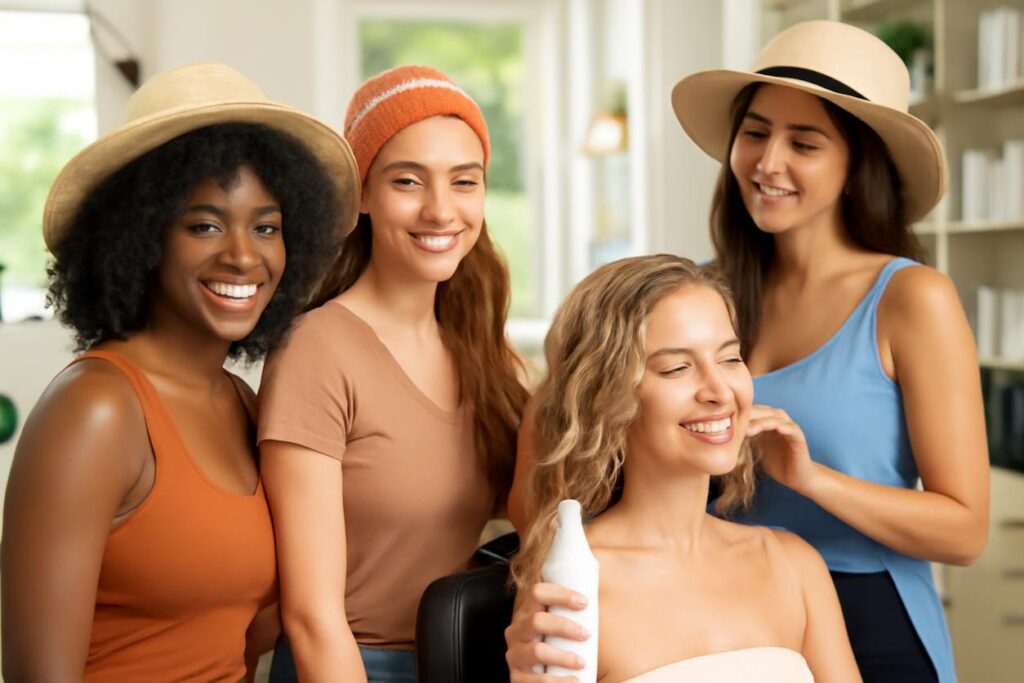
Hats and Scarves: A wide-brimmed hat is your hair and scalp’s best friend. Look for hats with a tight weave or those labeled with an Ultraviolet Protection Factor (UPF) rating for maximum safety. A stylish silk or cotton scarf can also be wrapped around your hair or tied over a ponytail to provide excellent coverage.
Behavioral Changes: Simple adjustments to your daily routine can make a huge difference. The Environmental Protection Agency advises that UV rays are strongest between 10 a.m. and 4 p.m. When possible, seek shade during these peak hours. Walk on the shady side of the street or use an umbrella to create your own personal shade zone.
Product based protection for hair and scalp
When you cannot wear a hat, specialized hair products with UV filters are your next line of defense. These products work by forming a protective film over the hair shaft that absorbs or reflects harmful UV radiation.
Ingredients to seek and those to avoid
When shopping for UV-protective hair products, check the label for these beneficial ingredients:
| Ingredients to Seek | What They Do |
|---|---|
| UV Filters (e.g., Benzophenone-4, Octinoxate) | Absorb UV radiation before it can penetrate the hair shaft. |
| Antioxidants (e.g., Vitamin E, Vitamin C, Green Tea Extract) | Neutralize free radicals generated by UV exposure, preventing further damage. |
| Hydrolyzed Proteins (e.g., Keratin, Silk, Wheat Protein) | Temporarily patch gaps in the cuticle, adding strength and moisture. |
| Natural Oils and Butters (e.g., Shea Butter, Coconut Oil) | Seal in moisture and provide a light physical barrier. |
Conversely, try to avoid products with high concentrations of drying alcohols (like alcohol denat) or harsh sulfates (like sodium lauryl sulfate), which can strip hair of its natural oils and worsen dryness caused by the sun.
How to apply scalp sunscreen safely and evenly
Your scalp is skin and is highly susceptible to sunburn and long-term sun damage. Protecting it is crucial. Applying traditional lotion sunscreen can be greasy and difficult. Instead, opt for these easier methods:
- Powder Sunscreen: A mineral-based powder sunscreen can be dusted along your part and hairline. It is lightweight and absorbs oil.
- Spray Sunscreen: Look for a lightweight, non-greasy spray designed for the scalp or hair. Hold the can several inches away and spray directly onto your part line.
- Stick Sunscreen: A sunscreen stick offers precise application along the part and hairline without making your hair greasy.
Styling choices that reduce exposure
How you wear your hair can significantly impact its sun exposure. Protective hairstyles minimize the surface area of your hair that is directly exposed to UV rays and protect the fragile ends.
Starting in 2025 and beyond, embracing protective styles will be a key strategy in your sun protection for hair arsenal. Consider these options:
- Buns: A high or low bun tucks away nearly all of your hair, especially the vulnerable ends.
- Braids: French braids, Dutch braids, or a simple plait keep hair contained and reduce the total exposed surface area.
- Twists: Similar to braids, twists are an excellent way to keep hair neat and protected.
Before styling, apply a leave-in conditioner with UV protection to add an extra layer of defense.
After sun recovery: masks, oils and salon safe resets
Even with the best preventative measures, your hair may still need some extra care after a long day in the sun. An after-sun recovery routine should focus on replenishing lost moisture and repairing protein damage.
Use a hydrating shampoo and follow up with a deep conditioning mask. Look for ingredients like aloe vera, hyaluronic acid, and shea butter. Applying a few drops of a nourishing oil like argan or jojoba oil to your damp ends can help seal the cuticle and restore shine. If your color has faded, a professional glossing treatment at a salon can restore vibrancy without the damage of a full-color service.
Simple DIY treatments using pantry ingredients
You can create effective, restorative hair masks using simple ingredients from your kitchen. These treatments are free of harsh chemicals and provide intense hydration.
- Avocado and Olive Oil Mask: Mash half a ripe avocado and mix with one tablespoon of olive oil. Apply to damp hair, focusing on the ends. Leave on for 20-30 minutes before rinsing thoroughly. This mask is rich in fatty acids and vitamins that deeply nourish the hair.
- Aloe Vera and Honey Mask: Mix two tablespoons of pure aloe vera gel with one tablespoon of honey. Aloe vera is incredibly hydrating and soothing for the scalp, while honey is a natural humectant that draws moisture into the hair shaft. Apply from root to tip, leave for 20 minutes, and rinse.
Caring for color treated and chemically processed hair in sun
If your hair is color-treated, bleached, or chemically processed (like a perm or straightener), it is significantly more vulnerable to sun damage. The chemical processes have already opened the hair cuticle, making it easier for UV rays to penetrate, fade color, and break down protein. For this hair type, vigilant sun protection for hair is non-negotiable.
Always use color-safe products with UV filters. A weekly deep conditioning treatment is essential to replenish moisture. Wearing a hat should be your default habit when outdoors for any extended period.
Swimming, saltwater and chlorine: compounding effects and fixes
Swimming in a pool or the ocean combines three damaging elements: harsh chemicals (chlorine) or minerals (salt), water that can strip moisture, and intense sun exposure. Chlorine and salt are both incredibly drying, and when the sun’s rays beat down on your wet, exposed hair, the damage is amplified.
Follow this simple three-step routine to mitigate the damage:
- Pre-Swim: Thoroughly wet your hair with clean, fresh water and apply a generous amount of leave-in conditioner. Your hair is like a sponge; if it is already saturated with clean water and conditioner, it cannot absorb as much damaging chlorine or salt.
- Post-Swim: Rinse your hair with fresh water as soon as you get out of the pool or ocean. This immediately removes the majority of the salt or chlorine.
- Cleanse and Condition: At the end of the day, use a gentle clarifying shampoo to remove any lingering buildup, followed by a rich, hydrating conditioner or hair mask.
When professional assessment makes sense
While most sun damage can be managed at home, there are times when a professional’s help is needed. If you notice severe, widespread breakage, a dramatic change in your hair’s texture that does not improve with deep conditioning, or persistent scalp irritation, it is time to consult a trusted hairstylist or a trichologist (a hair and scalp specialist). They can assess the extent of the damage and recommend in-salon treatments or a specific at-home regimen to nurse your hair back to health.
Quick reference checklist: seven steps to sunproof hair
Keep your sun protection for hair routine simple and consistent with this easy checklist:
- 1. Cover Up: Wear a wide-brimmed hat or a scarf during peak sun hours.
- 2. Use a UV Protectant: Apply a UV-filtering leave-in spray or cream to damp hair.
- 3. Protect Your Part: Use a powder, spray, or stick sunscreen on your scalp and part line.
- 4. Style Smart: Opt for protective styles like buns or braids to minimize exposure.
- 5. Rinse After Swimming: Immediately rinse hair with fresh water after exposure to chlorine or salt.
- 6. Hydrate Weekly: Use a deep conditioning mask at least once a week to replenish moisture.
- 7. Stay Hydrated: Drink plenty of water, as healthy hair starts from within.
Frequently asked questions
Can hair get sunburned?
The hair shaft itself does not get “sunburned” in the way skin does. However, the scalp can and does burn, which is painful and increases skin cancer risk. The hair sustains photochemical damage, which involves the breakdown of its protein and pigment, leading to dryness and color fade rather than a burn.
Can I use my regular body sunscreen on my hair?
While technically possible, it is not recommended. Body and face sunscreens are often thick, creamy, or greasy, which will weigh your hair down and make it look oily. It is much better to use products specifically formulated for hair, such as lightweight mists or serums with UV filters.
How often should I apply hair UV protection?
Treat it like skin sunscreen. If you are spending a full day outdoors, you should reapply your hair’s UV protectant every few hours. It is especially important to reapply after swimming, sweating heavily, or towel-drying your hair.
Wrap up: a sustainable maintenance plan
Protecting your hair from the sun does not have to be a complicated or time-consuming chore. By integrating a few simple, intentional habits into your routine, you can prevent the vast majority of sun-related damage. Think of sun protection for hair as an integral part of your overall wellness, just like skincare. A hat, a good UV protectant spray, and regular deep conditioning are small investments that pay huge dividends in the long-term health, strength, and vibrancy of your hair. A sustainable plan is built on consistency, ensuring your hair remains beautiful and resilient through every season.